

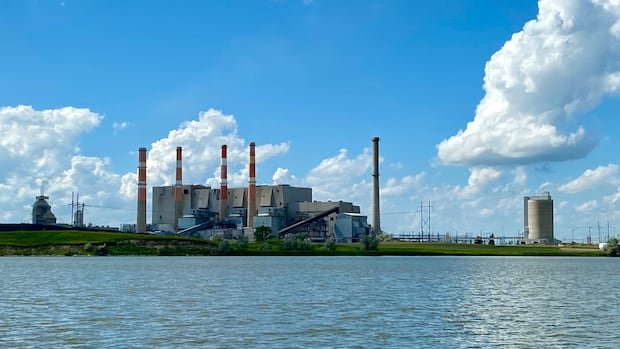

A recent study suggests that the Saskatchewan government’s decision to revamp its coal-fired power plants could incur expenses of up to $46.4 billion within the next two decades. This cost projection surpasses the amount revealed in leaked internal SaskPower documents, which estimated $26 billion over 25 years.
Brett Dolter, an associate professor at the University of Regina specializing in economics, conducted an analysis to assess the financial implications of Saskatchewan’s strategy to utilize coal-fired plants as a transitional phase towards nuclear power and the installation of Small Modular Reactors (SMRs). Dolter’s research indicates that this plan would not only be pricier but also more environmentally harmful compared to retiring the coal plants and transitioning to a mix of natural gas facilities and renewable energy systems, which was the initial provincial strategy before being changed in early 2025.
Dolter’s evaluation drew from leaked SaskPower documents disclosed by the Saskatchewan NDP, data submitted to the province’s rate review panel, and certain assumptions due to the absence of the provincial government’s internal analysis. He emphasized that incorporating carbon pricing into the equation further highlights the cost disparity. Without carbon pricing on heavy emitters, the expense of persisting with coal would amount to $30.2 billion over the next 20 years.
When factoring in carbon pricing, Dolter asserted that the total expenditure would escalate to $46.4 billion, aligning with the values outlined in Ottawa’s recent memorandum of understanding with Alberta. Dolter highlighted the impact of carbon pricing on coal plants, indicating significant financial implications due to the substantial pollution associated with such facilities.
While the financial ramifications of Saskatchewan’s current trajectory are evident, Dolter refrained from speculating on the government’s rationale for choosing this path despite being aware of the costs involved. In response to Dolter’s analysis, the provincial government provided a statement emphasizing the importance of reliable and affordable electricity for Saskatchewan’s ongoing development.
The government reiterated its commitment to an “all-of-the-above” approach in meeting the province’s energy requirements, focusing on the responsible utilization of Saskatchewan’s existing resources alongside transitioning to nuclear energy powered by local uranium. The decision to refurbish the coal-fired plants in 2025, as opposed to pursuing the previously endorsed coal-free future, was underpinned by concerns over potential job losses and economic impacts on communities like Estevan and Coronach.
Mayor Tony Sernick of Estevan expressed relief following the government’s decision, citing the potential negative repercussions on the city’s population had the coal plants been phased out. Sernick highlighted a shift in sentiment within the community, with renewed optimism and plans for future development bolstered by the coal plant refurbishment and potential nuclear transition.
The article also delves into the broader context of Canada’s transition away from coal-fired power, with Saskatchewan diverging from federal regulations to extend the lifespan of its coal plants. This deviation poses legal risks for the province, particularly concerning constitutional challenges related to clean electricity regulations, coal-fired plant mandates, and carbon pricing. Dolter warned of the substantial financial and legal consequences should the province proceed with refurbishing the coal plants only to face eventual closure due to legal disputes.