

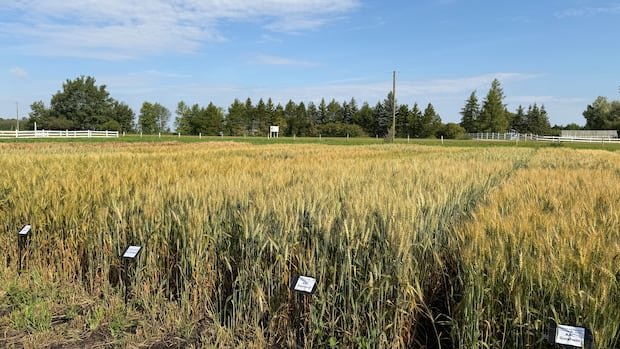

In northeastern Alberta, researchers are addressing copper deficiencies in cattle by applying the mineral to wheat crops to enhance fertility and overall health. They are also experimenting with various cover crops to determine their effectiveness in weed suppression, aiming to reduce herbicide usage.
Led by Jay Cory, a farmer and chair of the Lakeland Agricultural Research Association (LARA), the non-profit organization conducts research at its Fort Kent research field, situated around 250 kilometers northeast of Edmonton between Bonnyville and Cold Lake. Recently, local producers were given a tour of the facility to view the ongoing trials, which focus on enhancing productivity and sustainability through studies on crop varieties and practices.
Maria Angelica Ouellette, a research scientist at LARA, emphasized that the organization tests concepts in real-world settings, considering factors like precipitation variations and temperature changes. The research is shaped by inquiries from regional farmers, with the primary objective being to assist growers in achieving sustainable and productive crops on their land.
This year, the research faces the challenge of unusually wet weather impacting crop growth, as noted by Cory. These conditions provide valuable insights into how different trials perform under unexpected circumstances. The research program is driven by producers, ensuring that the team prioritizes issues that are relevant to local farmers and leverages their expertise.
Alyssa Krawchuk, the executive director of LARA, highlighted the importance of focusing on local conditions due to significant climatic differences across the province. The organization aims to minimize risks for farmers by conducting unbiased local research and sharing findings through events like field tours.
Cory emphasized the importance of balancing new solutions with cost considerations, stressing the need to evaluate how cost impacts yield. For Neil, Jay’s father and a founding member of LARA, having a platform for testing new research in the region reduces the risks associated with adopting new products or techniques, allowing farmers to learn from mistakes made in the research setting before implementing changes on their own farms.