

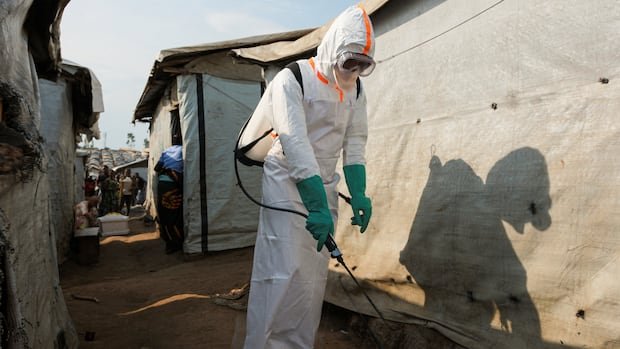

The Ebola crisis in the Democratic Republic of Congo has now become the most fatal in the nation’s history, with a rising number of confirmed cases sparking concern globally. As of August 16, the country’s public health ministry has reported at least 2,378 deaths due to the outbreak.
Described as the second-largest Ebola outbreak ever recorded, the current situation is progressing at an unprecedented pace, according to Tedros Adhanom Ghebreyesus, the Director-General of the World Health Organization (WHO). He emphasized that the epidemic is still far from being contained and remains a significant challenge.
Ebola is a severe disease associated with orthoebolaviruses, with several strains affecting humans, including Zaire, Sudan, Taï Forest, and Bundibugyo. The ongoing outbreak in the D.R.C. involves the Bundibugyo strain, marking the country’s 17th reported outbreak.
The outbreak, officially declared in May, is primarily concentrated in eastern D.R.C., bordering South Sudan and Uganda. While Uganda declared itself Ebola-free in late July, the first suspected case in the D.R.C. was a health worker who passed away in Bunia, the capital of Ituri province.
The rapid spread of Ebola in the current outbreak surpasses previous incidents. Within 100 days of confirmation in 2018, 323 cases were reported in the D.R.C., compared to 398 cases in Guinea during a similar timeframe in 2014. As of August 16, the D.R.C. has reported 5,021 cases, mostly in Ituri province, with a high case fatality rate and alarming mortality rate.
Various factors complicate the response to the outbreak, including the absence of a vaccine or treatment for the Bundibugyo strain, ongoing armed conflicts, internal displacement, cross-border movement, and resource constraints. Distrust towards government and healthcare interventions among residents further hampers containment efforts.
Efforts to control the outbreak emphasize testing, contact tracing, safe burials, isolation, and the deployment of more health workers. The WHO is intensifying its response, engaging local communities, deploying additional epidemiologists, and increasing treatment capacities. International support, both financial and operational, is crucial to prevent the escalation of the crisis.
The situation underscores the necessity of collaborative and comprehensive actions to curb the spread of Ebola and mitigate its impact on public health.