

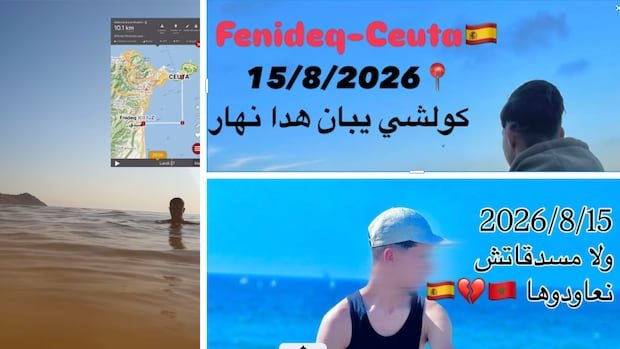

In the lead-up to the recent surge of migrants arriving in Europe, a brief video shared on Instagram attracted 1.4 million views. The video depicted a young man partially submerged in water, followed by a view of land with a map displaying a sea route from Fnideq, Morocco, to Ceuta, a Spanish enclave in Africa. The account holder later claimed arrival in the comments section.
This video was just one of several viral posts across Instagram, TikTok, and other platforms believed to have influenced two waves of irregular migration from Morocco to Ceuta. The latest attempt on August 15 resulted in numerous arrests. These posts were linked to various online communities focusing on migration-related content like music, memes, and imagery, some of which seemed to exploit the aspirations of African and Middle Eastern youths seeking better opportunities abroad.
There is a debate among governments and organizations regarding whether a single entity orchestrated the events in Ceuta or if migration was utilized for political purposes. Nonetheless, it is evident that misinformation spread by multiple online communities played a significant role in driving the migration waves towards Ceuta this summer.
CBC’s visual investigations team, with assistance from Sebastian Vandermeersch of the investigative collective Bellingcat, identified numerous social media accounts, particularly on Instagram, active before the initial wave on July 30. These accounts capitalized on misinformation suggesting that a Spanish court ruling would allow migrants arriving by sea to enter the country. Subsequently, faceless accounts began promoting the idea of a feasible crossing, leading to millions of views on some posts.
The aftermath was substantial, with over 72,000 individuals crossing the border on July 30, overwhelming Ceuta’s authorities and sparking a political crisis in Europe. While most of those who crossed have returned to Morocco, around 5,000 remain in Ceuta, supported by charities. Tragically, nearly 100 lives were lost in the attempt.
The surge in social media activity over the past month has been monitored by the Institute for Strategic Dialogue, revealing the tangible impact of misinformation when targeted at individuals desperately seeking solutions.
Several social media accounts directed followers to WhatsApp chats to plan crossings and shared guidance on reaching Ceuta. One video titled “the shortest distance” highlighted a specific section of a reinforced fence, indicating it as the best spot for crossing. Additionally, there were reports of accounts offering advice for a fee on entering Ceuta, exemplifying the exploitation of vulnerable migrants.
Following the events of July 30, Meta and TikTok committed to fact-checking posts to prevent criminal organizations from exploiting misinformation for profit. However, a new wave of posts surfaced before August 15, promoting it as the next opportunity to enter Spain by land and sea. Accounts involved in the previous crossing were active again, alongside new ones created shortly before August 15.
The surge in migration-related messaging reflects the deep-seated desperation and disillusionment among young people in North Africa and beyond. The allure of migration portrayed in aspirational language and images resonates with individuals facing high unemployment rates and limited prospects in their home countries. The recent events highlight the power of social media in shaping perceptions and decisions, especially among those seeking better lives in Europe.
The posts underscore the urgency felt by many individuals, with accounts using imagery and messages that hint at a journey to Europe without explicitly stating it. The use of hashtags and symbolic references further reinforces the narrative of migration as a path to opportunity and change. Despite these online influences, it is crucial to recognize that the aspiration to migrate existed independently of social media trends.
In conclusion, the recent events in Ceuta serve as a stark reminder of the complex interplay between online misinformation, real-world consequences, and the underlying socio-economic factors that drive individuals to seek new horizons.