

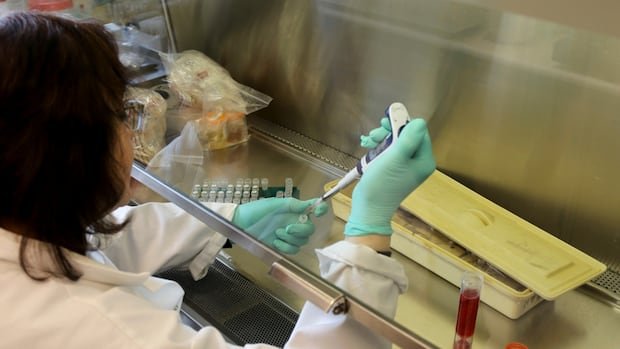

Canada is progressing with plans to construct a $267 million medical countermeasures laboratory in Winnipeg, a crucial move to prepare for future pandemics. However, experts caution that the facility will encounter significant obstacles related to long-term funding, staffing, and governance.
Last week, the federal government awarded a $10.2 million design contract for the facility, which is expected to be operational by 2033 adjacent to Winnipeg’s National Microbiology Laboratory (NML). While the laboratory’s purpose is to fill a critical gap in testing early-stage vaccines, therapeutics, and diagnostic tools, health researchers emphasize that sustained investments in human resources are essential for its success.
Dr. Joanne Liu, a physician and professor at McGill University’s School of Population and Global Health, and former international president of Médecins Sans Frontières, highlighted the importance of having skilled personnel to transform the building into a world-class center. She emphasized the need to align actions with the intent of developing countermeasures effectively.
The new facility will enhance Canada’s capacity for preclinical trials, providing dedicated space for lab and animal testing within the country’s research and development pipeline. According to Steven Guercio, NML’s chief operating officer, current space limitations sometimes force the repurposing of facilities meant for research on highly infectious pathogens like Ebola for preclinical trials.
Collaboration with industry and academic partners is envisioned, with appropriate agreements and screenings in place. The lack of local cleanrooms in Canada has hindered the progress of university researchers in transitioning vaccine discoveries to early human safety trials.
Experts stress the necessity of expanding Canada’s capacity in this area, as discussions on the matter have been ongoing for over a decade. Gary Kobinger, a former NML scientist and current director of the Level 4 Galveston National Laboratory at the University of Texas, emphasized the importance of committing to long-term funding to advance products developed at the laboratory.
Investing in pandemic research during non-crisis periods is crucial, according to McGill’s Liu. She emphasized the need for sustained funding throughout all stages of virus research, even during times when health threats are not at the forefront.
Challenges regarding governance and funding risks were also highlighted by Kobinger, who cautioned against complete government control of the countermeasures lab due to potential bureaucratic obstacles. He pointed to past instances, such as the handling of the Ebola vaccine in Canada, where funding challenges and technology transfer issues arose.
While the Public Health Agency of Canada acknowledged program adjustments post-pandemic, it reiterated ongoing funding commitments to strengthen medical countermeasures capacity and expand preclinical research in the country. The agency emphasized the presence of a robust talent pipeline to support these efforts.
Kobinger cited the operational delays at the Biologics Manufacturing Centre in Montreal as an example of past challenges in vaccine facility management. He emphasized the importance of avoiding past mistakes in patenting and administrative procedures to ensure the success of future projects.