

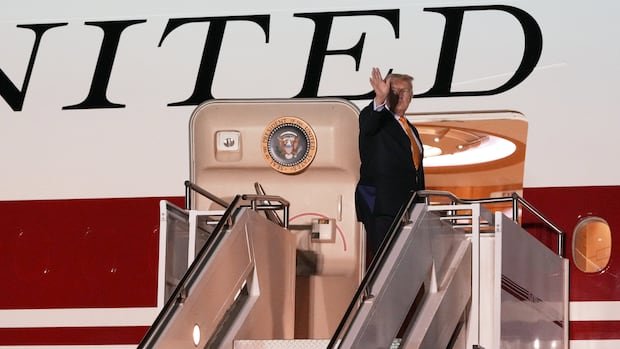

The recent covert operation involving U.S. President Donald Trump transitioning from Air Force One to a military plane using a catering truck in Turkey has raised unprecedented questions. Following a NATO summit in Ankara, Trump was discreetly moved due to an alleged Iranian threat, a maneuver that was not disclosed to the press or White House staff onboard Air Force One until it was revealed by the Washington Post. Trump, directed by the U.S. Secret Service, transferred to a smaller military aircraft with select aides after initially using a Qatari-donated jet for the summit.
The secrecy surrounding the plane switch has sparked comparisons to past incidents, such as President Bill Clinton’s use of a decoy plane in 2000 during a trip to Pakistan. The decision not to inform the press pool about the change has garnered criticism, with concerns raised about the safety of both the president and journalists involved. Despite the security measures in place on Air Force One, the seriousness of the Iranian threat against Trump has highlighted the ongoing risks faced by the administration.
Democrats have called for transparency regarding the events, with Sen. Chuck Schumer demanding a briefing for congressional leaders. The administration’s handling of the situation has reignited debates about presidential security protocols and the need for accountability in such instances. While the exact level of danger posed to Trump and the press remains unclear, the episode has underscored the complex challenges of ensuring the safety of high-profile figures in an increasingly volatile global landscape.