

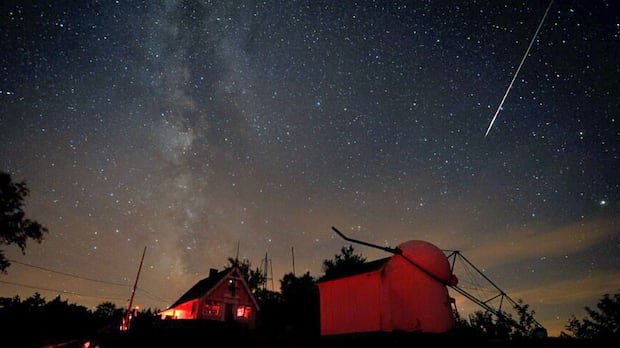

Every August, sky gazers are treated to the spectacular Perseid meteor shower, known for its abundance of bright meteors and favorable viewing conditions. This year, the peak of the shower coincides with a new moon, promising optimal viewing opportunities.
Renowned meteor astronomer Peter Brown anticipates a dazzling display of “Perseid grazers” – bright meteors that enter Earth’s atmosphere and swiftly return to space. The best time to witness these celestial phenomena is around midnight Eastern Daylight Time, with an expected hourly rate of up to 120 meteors.
While ideal conditions may not allow for such high numbers to be seen, viewers can still expect to witness a dozen or more meteors, especially in the early evening hours. The Perseid shower, which began on July 17, continues to intensify leading up to its peak night of August 12-13.
To optimize meteor viewing, enthusiasts are advised to seek clear skies away from light pollution and allow their eyes to adjust to the darkness for optimal visibility. The radiant point of the Perseids lies in the constellation Perseus, though meteors can streak across the entire sky.
In addition to the Perseids, other meteor showers like the southern delta Aquariids and the alpha Capricornids are currently active, enhancing the chances of spotting shooting stars. The upcoming partial solar eclipse on August 12 will not be visible in Canada, but observers can witness the moon partially obscuring the sun, especially in eastern regions.
Viewers are reminded to use approved solar eclipse glasses for safe viewing of this celestial event. Astronomers emphasize the eclipse as an awe-inspiring demonstration of celestial motions involving the Earth, moon, and sun.