

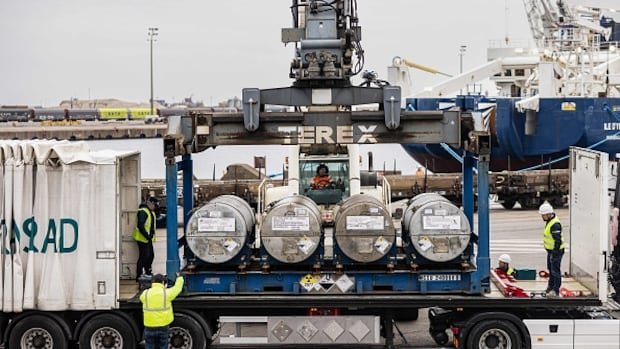

Amid the Russian military’s occupation of Ukraine’s largest nuclear plant and assault on the country’s power infrastructure, Europe and the United States continue to rely on Russian nuclear fuel for their electricity needs.
According to shipping data analyzed by CBC’s investigative program, the fifth estate, Canadian-owned Westinghouse Electric is one of the recipients of low enriched uranium (LEU) from Russia for fueling commercial nuclear reactors in the U.S.
In August 2024, the U.S. implemented a ban on the import of Russian enriched uranium to reduce dependency on Russian materials and ensure a stable domestic fuel supply. However, the Prohibiting Russian Uranium Imports Act allows waivers for scenarios where no alternative source of LEU is available or when deemed in the national interest. These waivers are set to expire by January 1, 2028.
Reportedly, the U.S. imported 400 tonnes of low enriched uranium from Russia in 2025 alone, valued at approximately $1 billion US. Major recipients included subsidiaries of French-owned nuclear company Framatome, U.S. nuclear fuel supplier Global Nuclear Fuel Americas, and Westinghouse.
While the U.S. took steps to lessen reliance on Russian uranium, the European Union has not imposed a ban on importing Russian enriched uranium. Dmitry Gorchakov, a nuclear adviser at Bellona, emphasized the need for countries to reduce dependence on Russia amidst the ongoing conflict.
Data analysis between Westinghouse and Tenex revealed ongoing uranium shipments from Russia to the U.S. over the past four years. These shipments are processed into fuel pellets at Westinghouse’s South Carolina facility for use in commercial nuclear power reactors.
The U.S. and Europe have a long-standing dependency on Russian enriched uranium, accounting for a significant portion of global supply. Efforts are underway to enhance domestic production and diversify supply sources to reduce this reliance. Notably, Westinghouse has been actively involved in the U.S. nuclear industry, with plans for significant investments in nuclear reactors.
Despite Canada’s sanctions against Russian entities, the country’s nuclear reactors do not require enriched uranium due to their use of natural uranium. However, proposed new reactors may necessitate enriched uranium, prompting government support for enrichment fuel contracts from allied countries.
While the EU has imposed sanctions against Russia, it has not banned the importation of Russian enriched uranium. The situation has raised concerns about Western companies engaging with Russian nuclear entities, which could inadvertently support Moscow’s aggressive actions.
Cameco, a key player in the uranium industry, has expressed support for Ukraine through agreements to supply nuclear fuel components. Westinghouse has also partnered with Ukraine to provide fuel and construct new reactors, aiming to reduce the country’s reliance on Russian nuclear fuel sources.
These developments underscore the ongoing efforts to diversify uranium supply sources and reduce dependency on Russian nuclear materials, particularly amidst geopolitical tensions and conflicts in the region.