

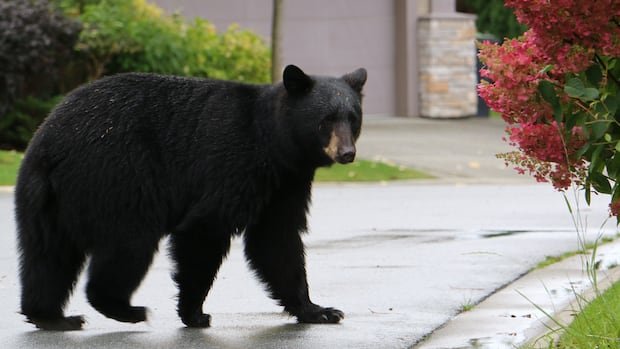

Officials are continuing their search for the black bear responsible for the attack on a three-year-old girl in Maple Ridge, B.C. The bear that was killed by the RCMP was not the one involved in the incident.
The B.C. Conservation Officer Service revealed that the young girl was playing on her family’s backyard deck when the attack occurred. A parent intervened and scared the bear away.
Despite the belief that the bear returned to the area multiple times that day, the police shot it to ensure public safety after it displayed signs of aggression. The bear fled into a wooded area after being shot.
A necropsy performed on the bear showed that it was not the one responsible for the attack. The girl sustained non-life-threatening injuries and was taken to the hospital by the RCMP.
A team from the B.C. Conservation Officer Service specializing in predator attacks is currently on-site, and the public is advised to steer clear of the area.
Wildlife veterinarian Ken Macquisten remarked that it was not surprising the wrong bear was killed, stating that the RCMP lacks expertise in bear behavior compared to conservation officers. He highlighted that the caliber of bullets used by police officers often results in injuring rather than killing the bear, making it more dangerous.
Lesley Fox, executive director of the wildlife conservation group The Fur-Bearers, emphasized the importance of proper identification and evidence in urgent situations involving wild animals. Both Macquisten and Fox advocated for more conservation officers to respond to wildlife incidents.
Maple Ridge RCMP defended their decision to dispatch the bear, emphasizing that the well-being of the public was their priority. The department noted that encounters with bears are not common for their officers, especially during peak bear activity seasons.
The Conservation Officer Service underscored that predator attacks are a top priority and highlighted their collaborative efforts with law enforcement agencies across the province.
The incident is under review to assess if additional training or equipment could enhance the response to similar situations in the future.