

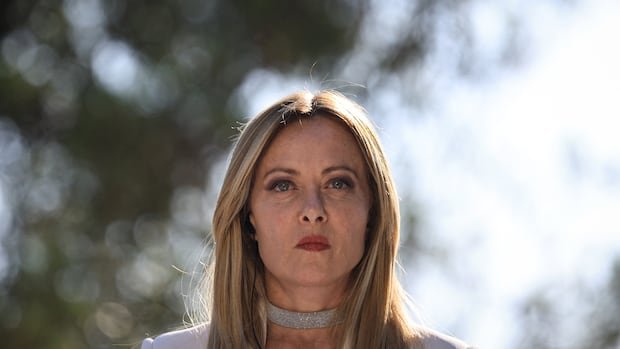

In the port city of Bari, Italy, over 10,000 supporters will gather on Friday to commemorate a remarkable achievement: Prime Minister Giorgia Meloni’s government will mark its 1,413th consecutive day in office, surpassing the previous postwar record set by Silvio Berlusconi’s administration.
The milestone will be celebrated with a rally organized by Meloni’s Brothers of Italy party at Bari’s port, where the prime minister will be joined by ministers, lawmakers, and other supporters to honor the government’s historic longevity.
Meloni, Italy’s first female leader, emerged from a background of resilience and determination. Raised by her mother in Rome’s Garbatella neighborhood, Meloni entered politics in the 1990s through the youth movement of the post-fascist Italian Social Movement. Known as an “underdog,” she draws inspiration from resistance, stating that a firm “No” motivates her the most.
Despite her confrontational image, Meloni’s governing style is characterized by caution rather than confrontation. She has displayed patience and strategic decision-making, evident from her ability to form a stable right-wing coalition government after the collapse of Mario Draghi’s administration in 2022. Meloni’s government has navigated various challenges, aligning with EU fiscal rules, maintaining pro-Ukraine stances, and managing a coalition with other parties.
Meloni’s success lies in her blend of fiery politics and practical governance, allowing her to maintain popularity and stability. While her policies on issues like migration and foreign relations have been firm, she has also demonstrated adaptability and compromise when necessary. Her ability to balance tradition with pragmatism resonates with a conservative electorate in Italy.
However, while Meloni has maintained political stability, critics argue that her cautious approach has hindered deeper structural reforms needed for economic growth. Despite her government’s fiscal discipline, concerns remain about addressing Italy’s economic challenges, such as low productivity and limited opportunities for women and youth in the labor market.
As the upcoming elections loom, Meloni faces challenges from within the right-wing spectrum, with rivals seeking to capitalize on her positions. The question of whether Meloni can translate her political stability into lasting change will likely be answered by Italian voters in the polls next year.