

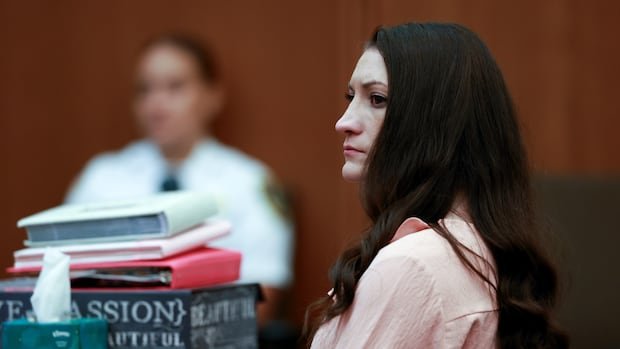

On Wednesday, as the jury in Lindsay Clancy’s murder trial began deliberating for the fifth consecutive day, a significant incident occurred in another courtroom. A 56-year-old woman, Dawn Light, faced charges of intimidating a witness, juror, or person related to Clancy’s trial at Plymouth District Court. It was alleged that Light had recorded jurors leaving the court shortly after they expressed their inability to reach a consensus on Clancy’s criminal responsibility for the deaths of her three children.
During Clancy’s trial proceedings, Judge William Sullivan initiated the session by delivering a general warning regarding adherence to courtroom conduct. The trial has been repeatedly overshadowed by external events, capturing public attention for the past five weeks. The case has sparked discussions on maternal mental health, triggered online speculations, and produced dramatic incidents both within and outside the courtroom due to the extensive public interest in the livestreamed trial.
Clancy, aged 36, stands accused of murdering her three children in 2023 while her then-husband was away. Jurors at the Plymouth County Superior Court in Massachusetts learned that she used exercise bands to strangle her children, Cora (5), Dawson (3), and Callan (8 months), in the basement of their Duxbury home.
The defense does not contest the killings but argues that Clancy is not criminally accountable due to her bipolar disorder and postpartum psychosis, a rare mental health condition affecting new mothers’ perception of reality. Prosecutors maintain that Clancy premeditated the murders to execute them while her husband was absent.
Several dramatic incidents have unfolded since the trial commenced on July 27, capturing public attention. These events include the arrest of a woman accused of recording jurors outside the courthouse, a mistrial request due to a witness mentioning Clancy’s Catholic upbringing, and the withdrawal of a journalist’s credentials for her conduct during the trial.
Additionally, the trial garnered widespread interest on social media platforms, with one witness posting a video addressing inaccuracies presented by the prosecution. However, the witness was ultimately not allowed to testify due to credibility issues. The prosecutor’s choice of wearing bows in court has also drawn attention, with contrasting opinions on its significance and appropriateness.
After five days of deliberations, the jury remained deadlocked, necessitating further discussions. If a unanimous verdict cannot be reached, the possibility of a mistrial looms. This high-profile case continues to captivate audiences, raising critical discussions on mental health, justice, and courtroom conduct.