

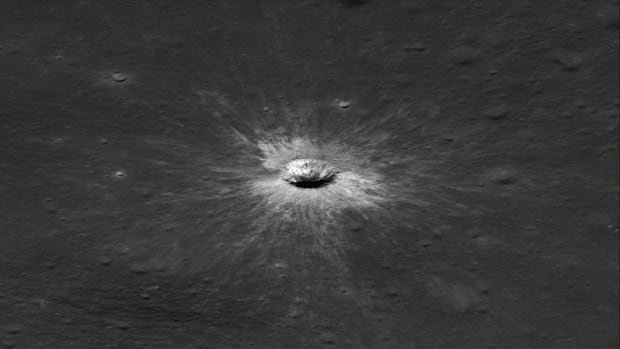

Scientists recently discovered a large crater on the moon resulting from a significant impact that occurred two years ago. The crater, measuring 222 meters across and up to 43 meters deep, is considered the largest known impact crater in the solar system carved out in modern times.
This rare event, estimated to happen once every 132 years, presents valuable information as NASA plans to establish a base for astronauts on the moon. The discovery was detailed in two studies published in the journal Science Advances.
The crater was identified by NASA’s Lunar Reconnaissance Orbiter (LRO) on the moon’s near side in May 2024, following the impact of an asteroid or comet fragment. Despite going unnoticed by telescopes on Earth and in space, the LRO captured images of the crater, named after Thomas McGetchin, a former director of Houston’s Lunar and Planetary Institute.
The impact, which spanned over 100 kilometers, resulted in the expulsion of dust and rocky soil at a higher angle than expected. This event highlights the dynamic nature of the moon’s surface, with the ejected material overturning the topsoil approximately every 80,000 years, as observed by the LRO since its launch in 2009.
Furthermore, a study identified a cold spot around the new crater, suggesting a loosening of the moon’s topsoil akin to gardening. These findings prompt researchers to assess the risk of ejected crater material impacting NASA’s future moon base, informing the design and construction of structures to mitigate potential damage.