

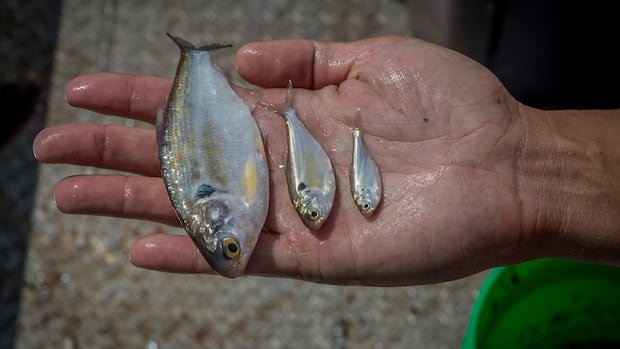

Almost two years following an unusual incident involving fish at Canada’s largest nuclear power plant, newly acquired documents shed light on the extraordinary nature of the event. Experts caution that abnormal ecological circumstances pose an increasing challenge for nuclear facilities globally. In February 2025, a massive influx of gizzard shad overwhelmed the cooling systems at the Bruce Nuclear Generating Station in Tiverton, Ont., leading to the shutdown of one reactor and a power reduction in another. Dead fish littered Lake Huron’s shores for days in the aftermath. CBC News obtained over 1,200 pages of federal and provincial records unveiling how an environmental occurrence involving a small, cold-sensitive fish put Canada’s largest nuclear power plant to the test in unforeseen ways. The private operator of the plant, Bruce Power, declined a broadcast interview but later issued a written statement without addressing specific queries from CBC News.
Bruce Power’s internal investigation determined that the plant had encountered “a novel environmental event.” Canada’s nuclear regulator described an unprecedented volume of gizzard shad, sufficient to overwhelm the plant’s defense mechanisms against fish intrusion into the cooling water system. Another investigation by the company in June 2025 concluded that the fish incidents on February 1 and February 13 “posed a challenge to reactor safety.” David Novog, a professor specializing in Nuclear Safety at McMaster University, emphasized that such challenges imply a reduction in the effectiveness of safety defenses, prompting mandatory shutdowns at nuclear power stations.
According to former Bruce Power principal scientist Douglas Boreham, the reactors responded as intended when the cooling systems were disrupted, emphasizing that there was no threat to reactor safety. However, regulatory correspondence from the Canadian Nuclear Safety Commission warned in May 2025 that the event could have necessitated the shutdown of all four units at the Bruce A facility. The scale of the fish event was staggering, with estimates indicating that 8.1 million gizzard shad were present near Bruce A on a single day in February 2025, surpassing previously disclosed figures.
The incident raised concerns about the impact on the grid due to reactor shutdowns. Restoring a reactor in Canada requires several days, representing a substantial blow to electricity generation. Recent cases worldwide have highlighted environmental conditions disrupting nuclear plant cooling systems, underscoring the industry’s need to adapt to a changing climate. Following the event at Bruce Power, the company has invested nearly $10 million in mitigation measures and research to prevent future disruptions. Enhancements include physical barriers, acoustic deterrents, and advanced monitoring systems to safeguard against similar incidents in the future. The focus on mitigating disruptions becomes crucial as nuclear power plants are increasingly relied upon to provide low-carbon electricity.