

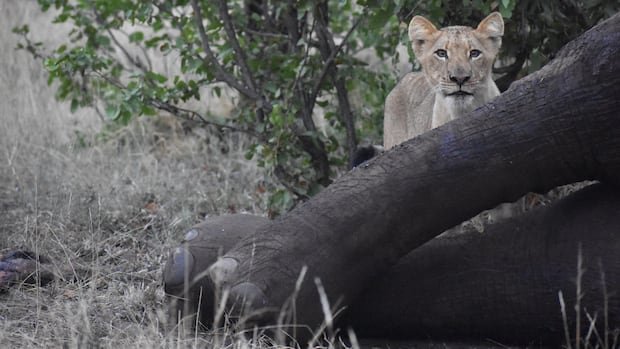

In the vast African savannah, elephants are reshaping the ecosystem even after their demise, a recent study reveals. A team of international researchers investigated elephant carcass sites in Kruger National Park, South Africa, uncovering the ongoing impact of these majestic creatures known as “ecosystem engineers.”
Lead researcher ecologist Courtney Reed shared that while elephants are recognized for their significant effects on the savannah during their lives, it was unclear whether these effects persisted post-mortem. The study, now published in the Proceedings of the National Academy of Sciences of the United States of America, delved into how the nutrients from elephant carcasses continued to play a vital role in the ecosystem.
Analyzing soil chemistry and biodiversity surrounding the carcasses, the researchers discovered that decomposition released substantial nutrient pools into the soil. This triggered soil microbial activity, fostering the growth of nutrient-rich plants that attracted herbivores long after the elephant carcasses had decomposed. The effects of this decomposition lasted for over seven years, although initially, the high nutrient concentration led to vegetation loss, creating barren patches.
Despite the initial setback, the ecosystem eventually rebounded as excess nutrients dissipated, leading to the return of nitrogen-rich vegetation crucial for herbivores’ protein intake. The study emphasizes the long-lasting positive impact of elephant carcasses on the surrounding environment, with grazing animals continuing to enrich the soil through their presence.
While the study highlights the beneficial aspects of elephant carcasses in sustaining the ecosystem, elephant ecologist Chase LaDue cautions that in landscapes where human encroachment has disrupted natural balances, the presence of elephant carcasses may have negative implications on biodiversity. LaDue stresses the importance of maintaining a delicate ecosystem balance to ensure sustainable biodiversity in the African savannah.