

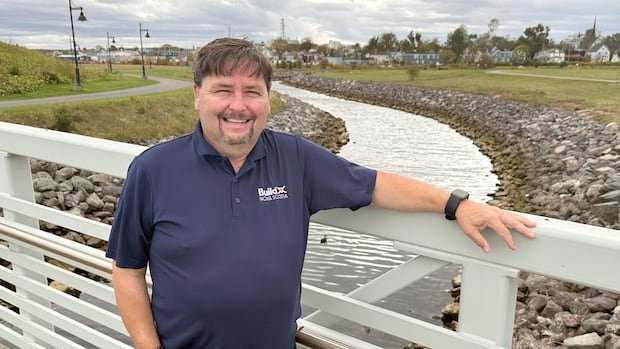

Fish populations are rebounding in the streams near the former tar ponds and coke ovens sites in Sydney, N.S., signaling a positive outcome following the extensive cleanup of decades of steel and coal industry remnants in Cape Breton.
The $400 million remediation project was overseen by the Sydney Tar Ponds Agency, which later merged into Nova Scotia Lands and is currently under the purview of Build Nova Scotia, responsible for monitoring water quality in the streams flowing through the former industrial areas.
Donnie Burke, a senior director at the agency, highlighted that reports from an independent engineering firm confirm the effectiveness of the remediation efforts.
“The ongoing data indicates stability or improvement, which is highly encouraging,” Burke mentioned during a recent assessment.
The former coke ovens ground was covered with residual slag rock from the previous steel plant, and the infamous tar ponds, situated adjacent to the coke ovens and previously recognized as Canada’s most hazardous waste site, were sealed with concrete.
Additionally, Coke Ovens Brook, Wash Brook, and Muggah Creek underwent cleanup processes, with the surrounding areas landscaped to channel surface water into the streams. Groundwater from the coke ovens site is treated before being discharged back into the brooks.
Both locations were then capped with topsoil and grass, transforming the former tar ponds into Open Hearth Park, featuring sports fields, a playground, walking trails, and open spaces. The coke ovens site now serves as an open field utilized for cricket, walking, and winter recreational activities.
Water quality tests indicate that the tar ponds cap remains secure without any toxic releases. Although occasional spikes in heavy metals or industrial chemicals occur at the former coke ovens site, especially after heavy rainfall, the monitoring system promptly detects and adjusts the water treatment process accordingly, Burke explained.
“There are some minor fluctuations, but overall, stability or improvement has been evident since the implementation of the cover,” stated Burke.
Water sampling in the streams and beneath the former coke ovens cap is conducted through wells scattered across the sites.
A recent study by Cape Breton University revealed the return of a small fish species to the streams, with provincial staff observing trout eggs and fry in Coke Ovens Brook, a remarkable shift from the previous conditions.
Dr. Katherine Jones, a biology professor at CBU, previously studied mummichog fish with health issues in the tar ponds area pre-cleanup. A recent study supervised by Jones showed a significant improvement in the fish health status post-remediation, with the disappearance of previous symptoms.
Jones emphasized the need for further studies to ascertain the impact of the remediated sites on local fish populations, including DNA testing to determine their origins and migration patterns.
The government has committed to monitoring the sites for 25 years post-cleanup, with regular updates available on Build Nova Scotia’s website. Burke affirmed that the monitoring progress is halfway through and indicates a positive trajectory.
Overall, the restoration efforts have led to a notable environmental recovery in the region, showcasing the potential for rehabilitation even in heavily industrialized areas.