

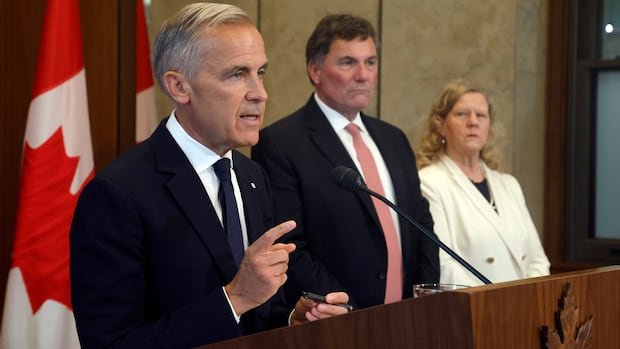

After a tumultuous week of negotiations, Prime Minister Mark Carney addressed the public on Saturday morning to clarify the reasons behind walking away from what he deemed a detrimental trade deal with the United States and the subsequent steps forward.
Carney emphasized Canada’s year-long earnest efforts in negotiating a comprehensive trade agreement with the U.S., highlighting the country’s pragmatism, patience, and persistence. However, the sudden introduction of unfair and economically unfavorable last-minute changes by American negotiators prompted Canada to reject finalizing the deal.
The announcement of Canada’s decision not to proceed with the agreement came shortly after U.S. Trade Representative Jamieson Greer revealed that Canada had declined to finalize the deal. The uncertainty surrounding the acceptability of the proposed deal raised concerns among Canadian officials and trade experts.
Former chief negotiator Steve Verheul expressed worries about potential concessions made by Canada, while former foreign affairs minister Chrystia Freeland raised concerns about the implications of accepting U.S. tariffs. The looming threat of job losses due to newly imposed tariffs further escalated tensions.
The situation has left both Canadian and American officials in a precarious position, with the future of trade relations hanging in the balance. The evolving dynamics of global trade, characterized by protectionism and power struggles, have complicated the prospects of reaching a mutually beneficial agreement.
Carney acknowledged the changing landscape of American foreign policy and the challenges in navigating the evolving trade environment. While emphasizing the importance of a functional relationship with the U.S., Carney underscored the need for a fair deal that prioritizes the interests of Canadian businesses and workers.
As the repercussions of failed negotiations unfold, questions arise about the next steps for both countries. The uncertainty surrounding retaliatory measures, potential counter-tariffs, and the resumption of negotiations underscores the complexity of the current trade impasse.
In light of these developments, Carney’s assertion that “no deal is better than a bad deal” resonates with the cautious approach adopted by Canadian officials. The road ahead remains uncertain, requiring strategic decision-making and diplomatic engagement to navigate the challenges posed by the evolving trade landscape.