

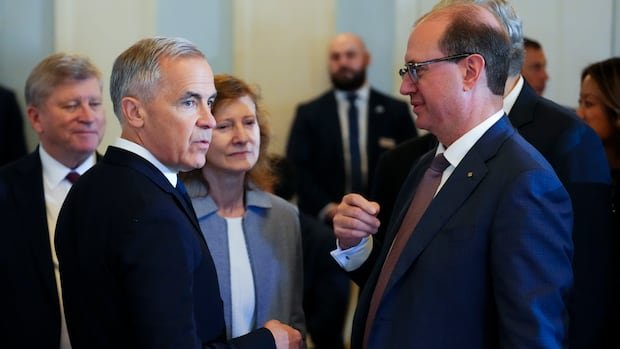

Canada’s envoy to the U.S. emphasized the necessity of reintroducing American alcohol in Canadian markets as a key step towards finalizing a trade agreement with the U.S. to avert potential new tariffs, as per information obtained by CBC News. Ambassador Mark Wiseman conveyed this message during a comprehensive briefing on the trade deal to approximately 100 members of the Canada-U.S. trade council, comprising various businesses, industry bodies, and labor unions.
The ongoing negotiations between Canada and the U.S. are critical to prevent the imposition of 50% tariffs on Canadian exports amounting to billions of dollars, with a looming deadline of midnight on Friday. Wiseman, during his briefing lasting around 30 minutes, shared insights on a preliminary consensus to avoid these new tariffs, as reported by three sources familiar with the call. The sources, who chose to remain anonymous due to lack of authorization, revealed that Wiseman mentioned around 35 Canadian officials are actively engaged at the Canadian Embassy in Washington to finalize the agreement language within a timeframe of 24 to 48 hours.
The potential trade deal is expected to encompass reductions in steel, aluminum, and auto tariffs, alongside modifications to the allocation of dairy import licenses by the government. Concerns were raised by former Canadian chief trade negotiator Steve Verheul, who highlighted potential drawbacks of the deal during the council meeting. Verheul, known for his role in the Canada-U.S.-Mexico Agreement and NAFTA negotiations, cautioned against conceding to sectoral tariffs and making such concessions, citing possible repercussions.
It has been reported that the proposed agreement includes halving steel and aluminum tariffs from 50% to 25%. Additionally, the headline tariff on Canadian-manufactured cars and trucks is anticipated to decrease from 25% to 15%, with provisions for American content exemption. However, there was disappointment among participants when Wiseman revealed that the auto industry may not receive the expected concessions, leading to deferral of the matter to CUSMA negotiations.
Verheul emphasized the risk of relinquishing leverage by Canada prematurely, potentially facing increased demands from the U.S. in the future. He underscored the importance of opposing the current sectoral tariffs and maintaining focus on achieving duty-free trade at the upcoming CUSMA review. Concerns were raised about the lack of adequate consultation with involved industries by the Canadian government, contrasting with the detailed briefings provided to the U.S. industry by the Trump administration.
In a call that also featured former deputy prime minister Chrystia Freeland, concerns were raised about the permanence of agreed tariffs and the difficulty of reversing them in the event of changing administrations in Washington. Freeland emphasized the challenges associated with agreeing to tariffs and the potential complexities in removing them later.