

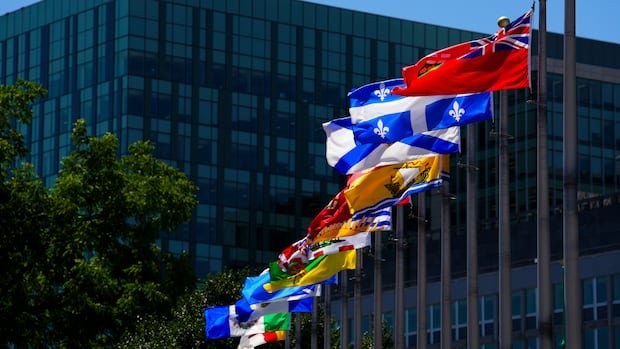

Following the breakdown of negotiations with the United States, there is a heightened sense of urgency in Canada to address internal trade barriers. However, experts caution that this is a complex issue that requires careful consideration.
Recent efforts to facilitate interprovincial trade have gained momentum. Last month, nine provinces reached an agreement to permit direct-to-consumer sales of alcohol across provincial borders as a step towards streamlining trade.
Nevertheless, even incremental progress in specific sectors like the alcohol industry highlights the obstacles in liberalizing trade. Some provinces have imposed additional fees and regulations on top of existing requirements within their jurisdictions, posing challenges for producers.
Jeff Guignard, the CEO of Wine Growers British Columbia, criticized the inefficiency of having to pay double wholesale markups and the burdensome process of registering in multiple provinces just to ship wine interprovincially.
Guignard emphasized the need to eliminate unnecessary bureaucratic hurdles that hinder trade within Canada, stressing the importance of viewing the country as a single economic entity rather than distinct provincial markets.
The potential economic benefits of harmonizing domestic trade are significant. The International Monetary Fund estimates that dismantling internal trade barriers could potentially increase Canada’s real GDP by up to seven percent, equivalent to approximately $210 billion in the long run.
In contrast, CIBC offered a more conservative projection in March, suggesting a one percent GDP boost from removing trade barriers. Despite the variance in estimates, the consensus is that any progress in this area is valuable and should be actively pursued.
This week, federal and provincial ministers convened in Iqaluit to advance the agenda of creating a seamless national economy by addressing obstacles to trade. The ongoing discussions aim to align regulations, improve the flow of services, standardize approval processes for construction materials, and facilitate the trade of food products across Canada.
Corinne Pohlmann, the executive vice-president of advocacy at the Canadian Federation of Independent Businesses, welcomed the renewed focus on eliminating provincial barriers, noting that recent initiatives have shown promise in recognizing and adopting common standards among provinces.
However, she highlighted the need for effective implementation and monitoring to ensure the practical application of these agreements on the ground.
Efforts to identify and address hidden trade barriers are also underway. University of Ottawa professor Wolfgang Alschner is utilizing artificial intelligence to analyze and compare regulations across Canada to identify inconsistencies and redundancies.
Alschner emphasized the complexity of navigating the vast regulatory landscape in Canada and underscored the importance of ultimately establishing a unified set of rules to facilitate trade efficiently.
The ultimate goal, according to Alschner, is not just reducing paperwork but enhancing real-world trade opportunities by streamlining regulations and processes.
Tag: rewrite-done