

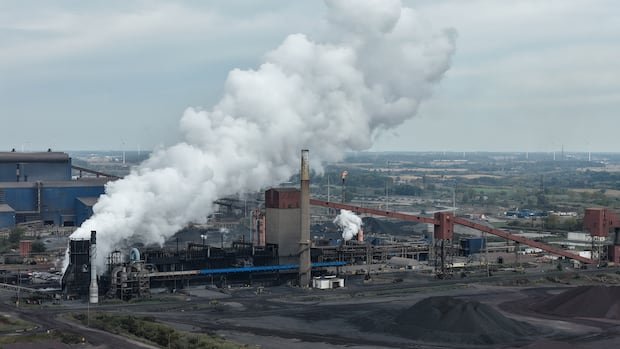

Stelco Holdings faces a tight deadline to present a strategy to prevent the ongoing layoffs affecting hundreds of steelworkers in Ontario. Failure to do so could lead to legal repercussions from the Canadian government. This situation serves as a critical test of accountability for foreign investors as Prime Minister Mark Carney endeavors to attract more foreign investment to Canada amid escalating trade tensions with the United States.
Looking back at a similar scenario from the past, in 2007, U.S. Steel acquired Stelco, which was then renamed U.S. Steel Canada. The Investment Canada Act mandates that significant foreign investments must benefit the domestic economy, requiring foreign buyers to provide written commitments to ensure a “net benefit to Canada.” However, following the 2008 financial crisis, U.S. Steel shut down most of Stelco’s Canadian operations, resulting in substantial job losses.
In response, the Canadian government initiated legal action against U.S. Steel in 2009. The lawsuit was eventually settled out of court in 2011, with U.S. Steel committing to maintain production in certain locations and make substantial capital investments. Subsequent developments saw U.S. Steel Canada filing for creditor protection in 2014, leading to a change in ownership and the revival of the Stelco brand.
Fast forward to 2024, Cleveland-Cliffs acquired Stelco in a multi-billion-dollar deal. Recent announcements from Stelco regarding production cutbacks and layoffs have raised concerns, prompting Industry Minister Mélanie Joly to demand a job-saving plan within five days, or face legal consequences. The situation has drawn attention to the implications for the Canadian government’s investment agenda and the need for foreign investors to adhere to regulatory commitments.
As the possibility of another legal battle looms, experts suggest that the outcome may involve court intervention or a negotiated settlement, depending on economic conditions and the actions of the companies involved. The situation underscores the delicate balance between enforcing regulatory compliance and fostering a conducive investment environment in Canada.