

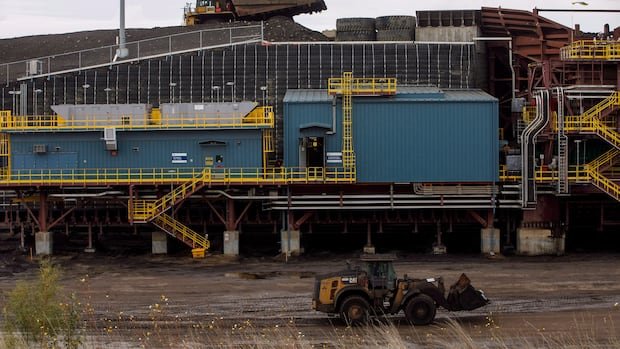

Alberta’s oilsands have seen a period of relative calm over the past decade. However, both the federal and provincial governments are optimistic that a new pipeline project on the West Coast, along with policy changes, could reinvigorate the industry.
Prime Minister Mark Carney visited Fort McMurray, Alberta, where he unveiled the first proposal classified as being in the national interest under recent legislation: the Pacific Link pipeline, capable of transporting one million barrels per day from Alberta to a tanker export terminal in southern British Columbia.
This designation streamlines the review process for the proposal, overseen by the major projects office based in Calgary.
The success of the pipeline hinges on oilsands companies’ willingness to invest in expanding their production capacities. During a press briefing, Carney was asked about the potential resurgence of growth in the oilsands hub city of northeastern Alberta.
“I wouldn’t characterize it as a ‘boom,'” he responded. “I would describe it as ‘sustained growth.'”
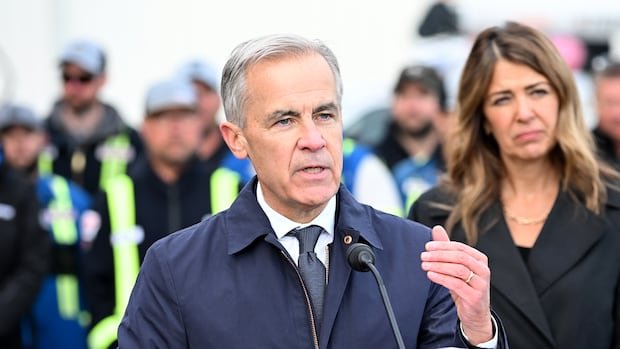
Prime Minister Mark Carney has designated the Pacific Link pipeline as a project of national interest under the Building Canada Act, expediting the approval process.
The previous boom period, spanning from the mid-2000s to the mid-2010s, was marred by cost escalations, labor shortages, and housing deficits. Carney and Alberta Premier Danielle Smith are optimistic that any resurgence in construction by oilsands companies will be different this time around.
For years, oilsands firms have avoided launching new multibillion-dollar megaprojects like those seen over a decade ago. The most recent mine development, Fort Hills, operated by Suncor Energy Inc., experienced a significant cost increase from $13.5 billion to over $17 billion between its approval in 2013 and its operational start in 2018.
Instead of embarking on large-scale “green field” projects, companies have chosen to optimize existing operations to enhance bitumen extraction or expand their current facilities.
Company executives have attributed this shift to constraints in pipeline capacity, complex regulatory processes, and stringent environmental standards hindering major expansion initiatives.
[Companies] have found ways to boost production without the previous challenges of mass migration and housing shortages.– Danielle Smith, Alberta premier
During the previous investment downturn a decade ago, global oil prices plummeted due to oversupply, compounded by the COVID-19 pandemic’s severe impact on demand.
As of 2026, the geopolitical conflict in the Middle East has underscored the fragility of global energy supply chains, prompting a quest for stable energy sources. Additionally, several energy policies introduced during the Trudeau administration, disliked by the oil industry, have been reversed, paving the way for projects like the Pacific Link pipeline to progress and potentially facilitate