


In his March 2025 state of the union address, President Donald Trump expressed optimism about the economic benefits of tariffs, predicting job creation and significant revenue gains. However, despite promises made during his first term in 2018 regarding paying off national debt and reducing taxes, the actual outcomes have not aligned with these projections.
Instead of a new economic era, the United States now faces a staggering $40 trillion in government debt, leading to concerns in the bond market and maintaining elevated yields and interest rates. While tariffs have brought challenges for some, they have also resulted in substantial profits for certain sectors of the economy.
Economists highlight that the primary impact of tariffs in the U.S. has been a considerable shift of wealth from lower and middle-class individuals to affluent corporations and well-connected entities. This wealth transfer aligns with the broader economic strategy pursued by the Trump administration and the Republican Party, emphasizing tax policies that benefit the wealthy.
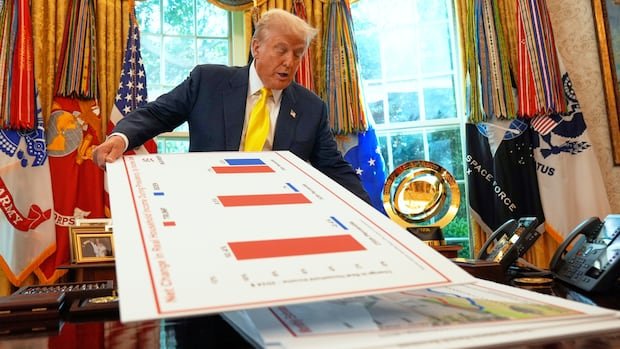
The implementation of tariffs has disproportionately affected lower-income households, as they spend a larger portion of their income on taxed goods. Conversely, wealthier households, who allocate more of their spending towards services and non-tariffed items, have faced a lesser impact. Additionally, the uneven distribution of tariff exemptions and rebates has further exacerbated wealth concentration, favoring large corporations over smaller businesses.
Recent developments reveal that the U.S. Treasury has issued over $100 billion in refunds to businesses affected by tariffs, with major corporations like Walmart and Target receiving substantial reimbursements. However, the disparity in treatment between these corporate entities and smaller businesses underscores the influence of political connections and lobbying efforts in securing favorable outcomes.
The complex interplay between tariffs, tax policy, and wealth distribution underscores the challenges posed by the current economic landscape. While tariffs were proposed as a means to fund tax cuts and revitalize American manufacturing, the reality paints a different picture. The burden of tariffs falls largely on consumers, with insufficient revenue generation to offset tax reductions for the wealthy, leading to a growing national debt and adverse economic repercussions.
Looking ahead, economists stress the need for a more balanced and sustainable approach to economic policy, emphasizing the importance of fair wealth distribution, transparent decision-making processes, and effective revenue generation mechanisms beyond tariffs.