

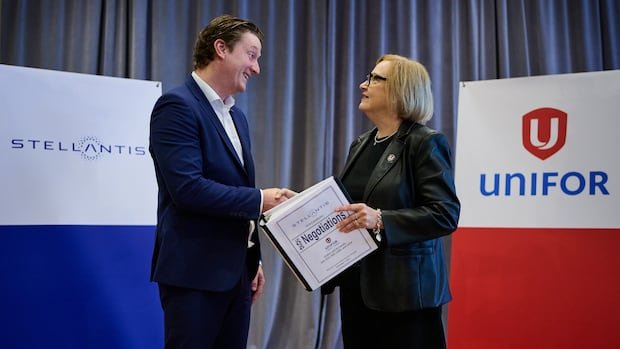

The labor union representing Stellantis workers in Canada cautioned the automaker against undervaluing its Canadian workforce as contract negotiations with Unifor commenced. Unifor, in its final round of talks with Detroit’s Big Three automakers, employs pattern bargaining to establish terms for negotiations with other companies. Unifor’s national president Lana Payne expressed concerns about the challenging negotiations ahead, citing uncertainties like trade wars and tariffs.
The looming deadline for a new agreement is set for September 11, with job security being a top priority for the union following layoffs at Stellantis’ Brampton assembly plant. Recent developments indicated potential closure and sale of the plant, leading to tensions over the relocation of Jeep Compass production to the U.S., breaching the existing collective agreement.
Stellantis emphasized the significance of the ongoing labor discussions for its future, acknowledging the industry’s evolving trade and regulatory landscape. The company highlighted its substantial investments in Canadian operations to enhance manufacturing capabilities and promote battery technology advancements, underscoring Canada’s importance as a market.
Against a backdrop of U.S. tariffs affecting the auto sector, Unifor highlighted the critical need for Canada to uphold its automotive industry amid threats of heightened tariffs. The union is engaged in a dual effort to secure production in Canada while also lobbying against trade agreements that could jeopardize the country’s auto industry.
Recent ratifications of new contracts with General Motors saw Unifor members in various locations voting overwhelmingly in favor of wage increases and other benefits, aligning with the pattern bargaining strategy initiated with Ford. The agreements reflect the union’s efforts to ensure fair compensation and working conditions for its members across the automotive sector.