

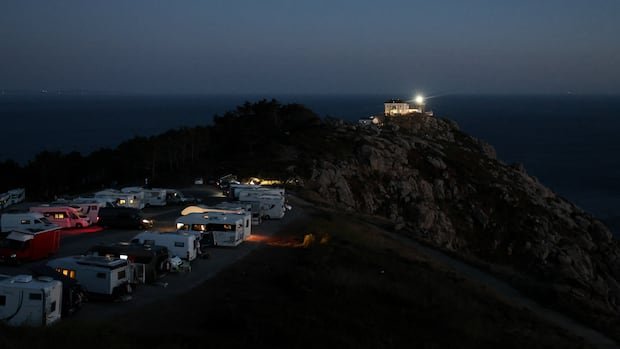

Hundreds of thousands of visitors have flocked to Spain to witness the solar eclipse happening this Wednesday. However, the occasion coincides with high temperatures and an increased wildfire risk in the country, causing concern for authorities aiming to prevent any fire damage. Virginia Barcones, the secretary general for civil protection and emergencies at Spain’s Interior Ministry, emphasized the need to restrict activities that could potentially lead to wildfires due to the challenging summer marked by major forest fires.
Spain, like other European countries, has been experiencing a heatwave since May, exacerbating the ongoing devastating wildfire season. The European Forest Fire Information System reported that approximately 603,000 acres of land have been consumed by around 400 fires this year. In response to the situation, 35,000 officers will be deployed on Wednesday to monitor large outdoor gatherings, ensuring prompt detection and prevention of any potential fires.
Spain is a prime location for viewing the solar eclipse, with a narrow band of totality crossing various regions, including northern Russia, eastern Greenland, and western Iceland. Authorities are emphasizing safety measures for eclipse viewers, emphasizing the importance of using proper eyewear to shield their eyes during the event. This solar eclipse marks the first time in 120 years that a full eclipse will be visible from mainland Spain, sparking a surge in travel interest.
In preparation for the influx of tourists expected to witness the eclipse, authorities have designated 660 official viewing sites along the path of totality to accommodate over 440,000 individuals. The economic impact of the eclipse is projected to contribute over 347 million euros to Spain’s economy, based on a recent study by the Ministry of Economy, Trade, and Business.
Despite the heightened wildfire risk in the region, eclipse enthusiasts remain undeterred. Jan Cami, a professor at Western University, highlighted the unique experience of witnessing a solar eclipse and the visible impact on the environment during totality. The upcoming eclipse is the first in a series of three solar eclipses that will be visible from Spain, with the 2027 event expected to draw even more astrotourists as it crosses southern Spain and continues through North Africa and the Middle East.