

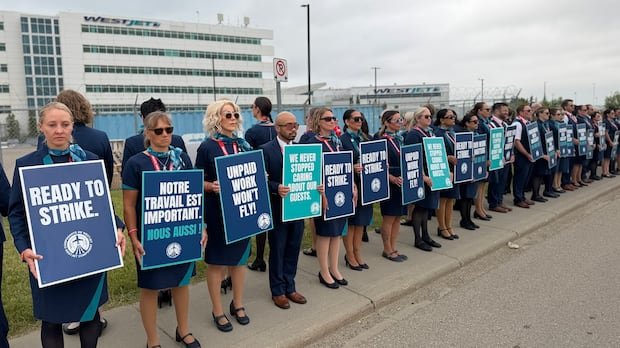

WestJet, the second-largest airline in Canada, is making preparations to gradually suspend operations before the potential strike or lockout of its flight attendants. However, this plan does not signify an imminent labor dispute, as negotiations between the union and the company are ongoing.
In a communication disclosed to certain employees and obtained by CBC News, Robert Antoniuk, WestJet’s vice-president of inflight operations, clarified that the agreement between the union and the airline does not indicate a move towards labor action. The agreement outlines the process to wind down operations if negotiations between CUPE WestJet Component and the company do not succeed.
CUPE union representatives emphasized that their members have consistently expressed the desire for a fair resolution without resorting to a strike. According to Federal Transport Minister Steven MacKinnon, federal mediators are actively engaged in the negotiation process, with hopes of reaching a mutually agreeable settlement.
Former Air Canada director and current McGill University faculty lecturer in supply networks and aviation management, John Gradek, explained that it is customary for airlines like WestJet to have contingency plans in place to slow down or cease operations before a labor dispute emerges. This pre-positioning is essential to ensure that aircraft and crew members are not stranded abroad in the event of a shutdown.
While WestJet has not officially announced any flight cancellations related to the potential labor dispute, it has offered flexibility to passengers traveling between July 30 and Aug. 4. Approximately 4,400 union members represented by CUPE WestJet Component could legally go on strike by Aug. 2, following a strong vote in favor of striking. The ongoing negotiations have primarily revolved around the flight attendants’ concerns regarding uncompensated work hours.
The issue of “unpaid work” remains a point of contention, with the union asserting that flight attendants are not adequately compensated for all their duties. WestJet maintains that its current pay system is in line with industry standards and ensures that flight attendants are remunerated for their work hours.
In the event of a strike or lockout, either party must provide 72 hours’ notice, potentially affecting thousands of passengers. WestJet’s willingness to engage in negotiations and the union’s push for fair treatment underscore the importance of reaching a resolution to avoid disruptions in air travel services.