


Two of the most infamous unsolved murder cases in American history have captured the public’s fascination for decades. The brutal 1947 killing of Elizabeth Short, famously known as the Black Dahlia, and the chilling Zodiac killings that plagued Northern California in the late 1960s. However, a daring assertion by amateur detective Alex Baber posits that a single individual may have been behind both cases.
In January 1947, the mutilated body of 22-year-old Elizabeth Short was found in Los Angeles’s Leimert Park. Her corpse had been gruesomely severed in half, with a sinister smile carved into her face. Further mutilations included the removal of flesh from her thigh and breast, a patch of skin cut near her left nipple, and intricate patterns etched onto her abdomen.
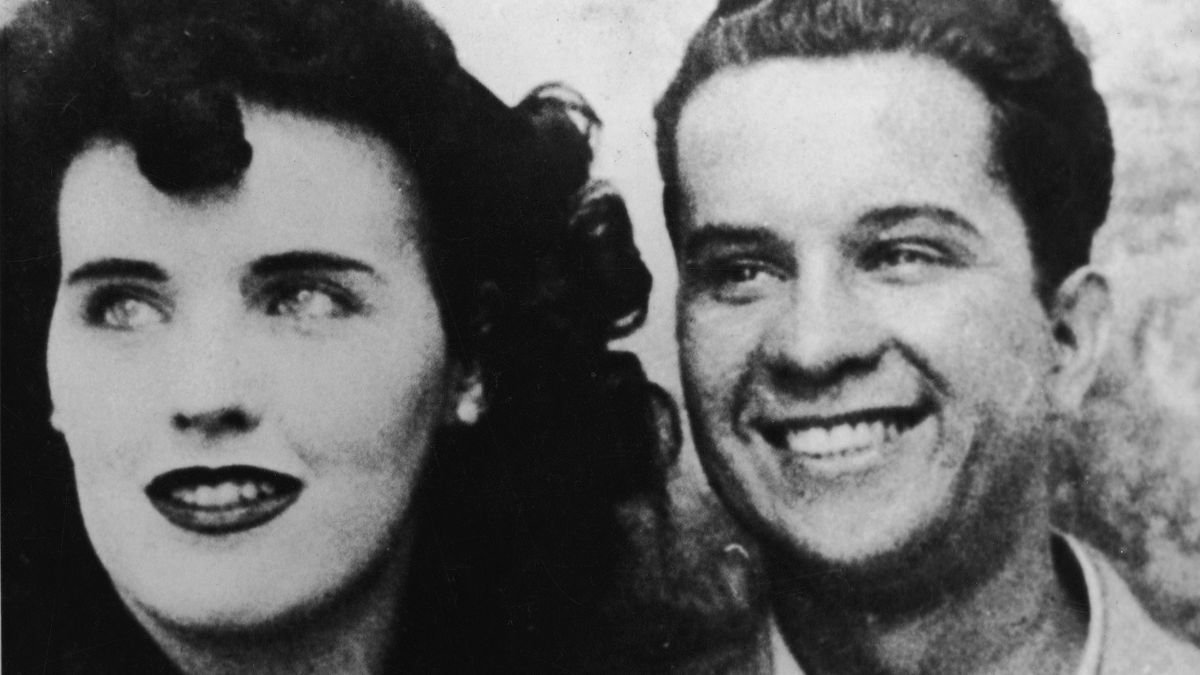
Surprisingly, there was no blood at the crime scene, leading authorities to believe she was murdered elsewhere and then dumped. Dubbed the Black Dahlia by the press, a moniker originating from her dark clothing and hair, Short’s life in Hollywood was brief but eventful. She had relocated from Massachusetts to chase her Hollywood dreams and was romantically involved with Marvin Skipton Margolis, a former Navy corpsman training to become a surgeon. Margolis emerged as a key suspect in the Black Dahlia case, as per Baber’s investigation.
Grand jury records indicate that Margolis, who later changed his surname to Merrill, was the sole pre-medical student who shared a residence with Short, along with friends Margorie Graham and Bill Robinson. Short had allegedly expressed fears for her safety in the weeks leading up to her demise, confiding in friends about a jealous ex-boyfriend who had threatened her. Witnesses reported seeing a distressed Short at a bus station mere hours before her body was discovered.
The killer, who later identified himself as the “Black Dahlia Avenger” in communications with the media, taunted law enforcement and sent personal belongings of Short to newspapers. Despite extensive probes, no one was ever charged, and the case went cold.
Twenty years later, the Zodiac made his presence known, causing terror in Northern California. Commencing in December 1968, he targeted young couples in isolated locales, claiming at least five lives and injuring two others while sending cryptic messages to newspapers. The Zodiac boasted about the murders and included codes challenging authorities to unravel his identity. His initial assault resulted in the deaths of 17-year-old David Faraday and 16-year-old Betty Lou Jensen on Lake Herman Road.
Subsequent attacks involved the stabbing of Bryan Hartnell and Cecelia Shepard at Lake Berryessa, and the fatal shooting of cab driver Paul Stine in San Francisco. The killer’s final correspondences in 1974 boasted of 37 victims and contained unsolved cryptograms.
Baber’s inquiry revolves around Margolis/Merrill, highlighting how his military background, which encompassed surgical expertise and sharpshooting skills as a Navy corpsman, aligned with the methodical precision observed in both the Black Dahlia and Zodiac cases. Merrill also possessed code-breaking familiarity, mirroring the cryptographic challenges issued by the Zodiac. Notably, Merrill owned a Japanese Nagoya rifle equipped with a Type 30 bayonet, akin to the weapon used in the Lake Berryessa incident.
Margolis, later known as Merrill, passed away in California in 1993, seemingly taking his secrets with him. However, evidence supporting Baber’s theory surfaced through a box handed over by Merrill’s youngest son. Inside was a black ink drawing of a partially nude woman displaying injuries resembling those inflicted on Short.
Beneath the figure was the capitalized name “ELIZABETH,” akin to the Zodiac’s lettering style. Baber alleges that enhanced imaging software revealed the hidden word “ZoDiac” in the ink, interpreted as Merrill’s final confession; he had been diagnosed with cancer in 1992, the year the sketch was created.
Moreover, Baber asserts that he decrypted the Zodiac’s unsolved 13-character cipher (Z13) using AI technology and newly released Census records from 1950. Through this method, he identified Marvin Merrill as the prime suspect in both murder series.
Baber contends that Merrill’s movements post-Black Dahlia killing aligned with the timeline of the Zodiac assaults. Following Short’s death, Merrill relocated to Chicago, remarried twice, had children, and returned to the West Coast in the early 1960s, just before the Zodiac’s initial confirmed attacks.
For Baber, this investigation holds personal significance. His meticulous research merges two of America’s most notorious crimes, potentially offering closure to the victims’ families. The validation of his findings by authorities remains uncertain.
When approached by the Daily Mail, Merrill’s youngest son dismissed Baber’s assertions as speculative and fictional. If proven accurate, it would shed light on the extreme lengths a person with military training and personal vendettas might go to conceal a lifetime of violence.