

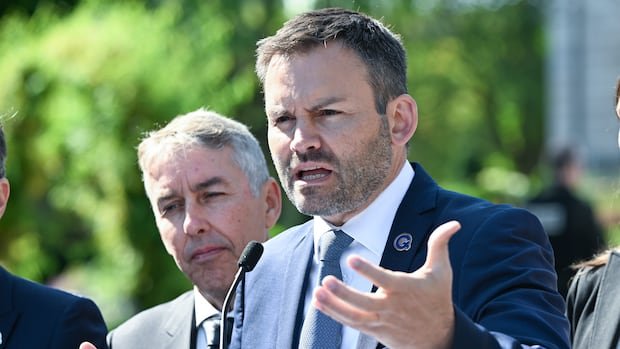

Parti Québécois Leader Paul St-Pierre Plamondon faced criticism from opponents on Friday following the revelation that his proposed sovereignty referendum would carry a price tag of at least $130 million. While three of the five campaign leaders argued that there were more beneficial ways to allocate these funds, the sovereigntist left-wing party Québec Solidaire stood by the proposed expenditure.
In a discussion with The Canadian Press, St-Pierre Plamondon outlined the financial aspects of preparing for and conducting the referendum in either 2029 or 2030 if his party assumes power. The projected budget for the referendum encompasses $20 million for initial studies and consultations during the early years of a Parti Québécois government term. Holding the referendum in 2029-30 would require $110 million, as indicated by the party leader. St-Pierre Plamondon acknowledged that the costs might surpass this figure in case of unforeseen expenses.
“The public will have its say, but we stand firm on our commitment to democracy and engaging the populace if the need arises,” he remarked. The details of his party’s referendum budget are set to be included in the financial plan he intends to unveil on September 15, coinciding with the first leaders’ debate of the provincial election campaign culminating on October 5.
Expressing dissent towards the plan, Coalition Avenir Québec leader Christine Fréchette pointed out missing elements in St-Pierre Plamondon’s proposal, emphasizing the undisclosed expenses that could emerge post-referendum. “The Parti Québécois claims to have estimated the referendum organization cost at $130 million. However, what about the expenses in the first year of a sovereign Quebec? They remain completely silent on that matter,” she critiqued.
Fréchette, refraining from revealing her stance on a sovereignty referendum, identified herself as an “autonomist,” pledging to advocate for Quebec’s interests within Canada. “The $130 million could be put to more productive use elsewhere,” she asserted. Quebec Liberal Leader Charles Milliard echoed this sentiment, denouncing the planned expenditure as a misappropriation of funds during a separate press briefing.
Conservative Leader Éric Duhaime swiftly condemned St-Pierre Plamondon’s strategy, deeming it “unacceptable” to propose such expenses amidst a period of high living costs. “Regrettably, the Parti Québécois seems detached from reality,” Duhaime remarked.
St-Pierre Plamondon affirmed that his party intends to conduct a referendum on Quebec sovereignty post the departure of U.S. President Donald Trump, regardless of whether they secure a majority or minority government. Responding to the backlash, St-Pierre Plamondon defended the referendum budget and highlighted that general elections in the province incur costs of around $110 million.
He emphasized that Quebec’s independence would yield long-term savings. “Our objective is to eliminate federal redundancy and inefficiencies, which cost us billions,” he emphasized. Québec Solidaire co-spokesperson Ruba Ghazal, advocating for extensive consultations on Quebec sovereignty, justified the need for broad engagement with various segments of society.
If elected premier on October 5, St-Pierre Plamondon disclosed plans to appoint a minister dedicated to the independence process, replacing the current minister for Canadian relations. He assured that there are no intentions to expand the size of the ministry, underscoring the integration of intergovernmental relations with Ottawa into the independence project.
Throughout the election campaign, the PQ’s adversaries have demanded transparency on the potential referendum costs, prompting St-Pierre Plamondon to disclose the financial details. “Part of my opponents’ tactic is to demonize public consultations regarding the future, portraying it negatively. However, our proposal aims to curb historical wasteful spending,” he stated. St-Pierre Plamondon expressed confidence in the budgeting of his party’s commitments, describing it as a cautious fiscal approach.
The financial plan he is set to unveil will serve as “the budgetary blueprint for a Quebec within the current context,” excluding post-independence pledges like the establishment of a Quebec army in case of a “Yes” victory. “Quebec’s financial framework will evolve following its independence,” he concluded.