

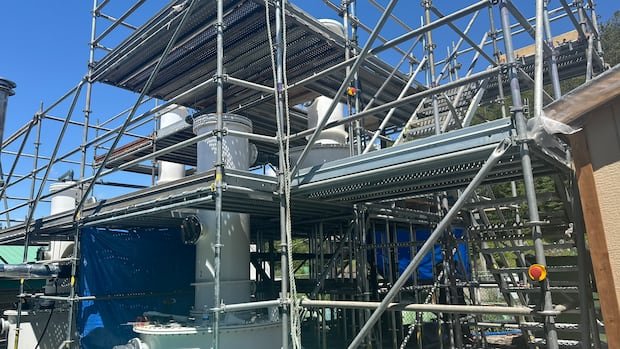

A startup in Nova Scotia is conducting trials to capture and store more carbon in the ocean through a new pilot facility to validate the concept. The ocean currently serves as a significant repository for excess carbon dioxide, having absorbed approximately 30% of human-induced carbon emissions since the 1980s.
pHathom, the company behind the initiative, aims to further reduce emissions by capturing carbon dioxide and transforming it into a form suitable for safe, long-term storage in the ocean. The testing of this approach will take place at the Huntsman Marine Science Centre in St. Andrews, New Brunswick. Kimberly Gilbert, co-founder and CEO of the company, emphasized the importance of demonstrating the safety and effectiveness of the local solution to combat climate change.
The company’s method replicates a natural process where raindrops absorb carbon dioxide from the atmosphere, becoming slightly acidic. When these raindrops interact with alkaline rocks like limestone, the rock dissolves, converting the carbon dioxide into bicarbonate. This bicarbonate can then be stored in the ocean for thousands of years, preventing the release of carbon dioxide back into the atmosphere.
pHathom’s technique involves treating seawater with the exhaust from a biomass power plant to increase its acidity. By mixing this acidic water with limestone particles in a tank, the carbon dioxide is converted to bicarbonate before being reintroduced into the ocean with the same pH level as regular seawater.
Several companies in Nova Scotia are exploring variations of carbon removal methods, including alkalinity enhancement. Planetary and CarbonRun are among those testing similar approaches in the region. pHathom’s method, utilizing concentrated carbon dioxide and a contained reactor, aims for higher efficiency with measurable environmental impacts.
The pilot project targets capturing 0.1 tonnes of carbon dioxide daily, a significant step compared to the emissions from traditional power plants. The treated water from the process will be used to monitor its effects on marine species over a three-month period.
If successful, pHathom plans to expand its operations with a second test site in Nova Scotia next year, integrating the reactor into a facility transitioning from fossil fuels to a biomass system. Despite challenges such as energy consumption and scalability, the company remains hopeful that advancements in carbon removal technologies will drive global action to combat climate change.
Recent reports highlight Canada’s leading role in ocean alkalinity enhancement research, with calls for international collaboration and regulatory frameworks to support such initiatives. While economic uncertainties may impact the viability of carbon capture projects, the necessity of transitioning away from fossil fuels to address the climate crisis remains paramount.
Kimberly Gilbert is optimistic that with increased focus on environmental concerns, technologies like those developed by pHathom will be ready to play a crucial role in mitigating climate change when the world is prepared to take decisive action.