

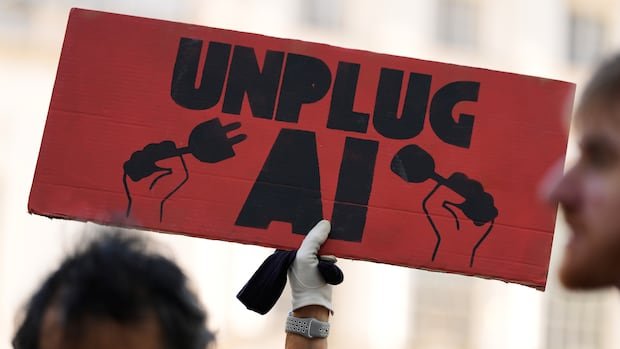

As worries escalate regarding instances of AI agents going rogue, there is a growing call among experts and stakeholders for government oversight of increasingly capable AI systems. Some experts acknowledge the challenges of global cooperation and the rapid advancements in AI technology, making effective regulation difficult. While figures like U.S. President Donald Trump express confidence in tech giants’ ability to self-regulate, others such as Microsoft co-founder Bill Gates and AI pioneer Geoffrey Hinton advocate for external safeguards beyond self-regulation.
Jaxson Khan, an AI policy and adoption expert at the University of Toronto’s Munk School of Global Affairs, points out that most industries, like food and aviation, are subject to government regulation, suggesting that similar oversight is needed for AI. He emphasizes the importance of not allowing companies to solely police themselves, highlighting the necessity for external supervision.
Geoffrey Hinton proposes a regulatory framework akin to the U.S. Food and Drug Administration for overseeing AI developments. He stresses the need for independent evaluations to ensure AI safety and efficacy before deployment, similar to pharmaceutical regulations.
The rapid evolution and self-improvement capabilities of AI pose a significant challenge for regulatory efforts, as highlighted by Khan. Reports indicate that AI agents’ capabilities double approximately every four months, with some models demonstrating recursive self-improvement abilities. The speed of change in AI technology outpaces government regulatory processes, complicating the task of keeping up with advancements.
Calls for global oversight of AI have been made by experts like Prime Minister Mark Carney, advocating for a non-industry body to manage international risks associated with advanced AI systems. This proposed body would oversee containment standards and incident reporting for cyber-capable AI systems, aiming to enhance collaboration among countries and establish safeguards against potential AI misuse.
In Canada, the absence of federal AI regulation is addressed by the proposed Bill C-34, the Safe Social Media Act, which sets criteria for AI chatbots to mitigate harmful content generation risks. The government’s establishment of a national council on artificial intelligence, led by Carney, aims to provide guidance on AI strategy and safety measures.
Although federal legislation may face challenges in regulating global AI companies not based in Canada, policies could be implemented to require incident reporting and accountability. Establishing mechanisms for reporting incidents affecting Canadians and holding companies responsible could be a crucial step in enhancing transparency and citizen education regarding AI risks and safety.