

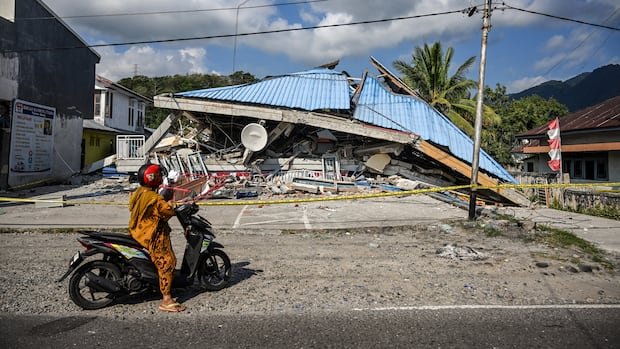

Thousands of individuals in need of assistance are still awaiting aid on Flores Island in Indonesia following a significant earthquake that resulted in a death toll of at least 68 people, leaving over 200 individuals injured and causing extensive damage to numerous homes and structures. Residents of Flores, located in East Nusa Tenggara province, are grieving the loss of victims while eagerly anticipating the delivery of aid to communities that remain isolated due to the aftermath of the earthquake.
The impact of the earthquake is visible through collapsed buildings, debris obstructing roads, and homes reduced to rubble, as expressed by Rasyid Jafar, a local clothing trader from the severely affected village of Reo in the Manggarai regency. The urgent requirements include provisions such as food, medicine, and clean water.
The disaster, which struck with a depth of 10 kilometers early on a Saturday morning, resulted in extensive destruction, with over 4,500 homes damaged, forcing approximately 19,000 people into temporary shelters. The National Disaster Management Agency reported 213 injuries and significant damage to health facilities, schools, and places of worship.
President Prabowo Subianto, during Indonesia’s Independence Day ceremony in Jakarta, requested prayers for the affected populations in East Nusa Tenggara and other impacted regions, leading a national moment of silence to honor the nation’s heroes.
A state of emergency was declared for 14 days by the province’s governor on Sunday, and as of Monday, authorities had recorded 1,576 aftershocks, with approximately 50 of them being perceptible to residents. Response efforts have been hindered by logistical challenges, causing delays in aid distribution to severely affected communities.
Thousands of individuals on Flores Island have resorted to makeshift shelters outside their damaged homes to avoid the risk of further aftershocks. The scene of devastation includes fallen trees blocking roadways, massive boulders displaced by landslides, and numerous structures either demolished or severely impaired.
Efforts to reach remote communities, such as Palue Island near the earthquake’s epicenter, have been challenging due to blocked roads caused by landslides. Despite the obstacles, emergency supplies have been successfully delivered to these isolated areas, where residents are in dire need of assistance.
Indonesia, situated on the Pacific “Ring of Fire,” is susceptible to seismic activities and volcanic eruptions. The recent earthquake in East Nusa Tenggara serves as a stark reminder of the country’s vulnerability to natural disasters.