

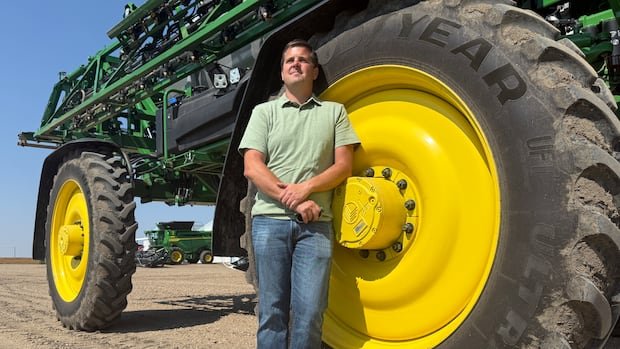

In Coleville, Saskatchewan, Dean Roberts observed a large grey drone flying over his 4,000-hectare farm, which cultivates various crops like canola, wheat, barley, and lentils. The drone, a DJI T100, is currently the largest spray drone in Canada with a 100-liter tank approved by the federal government for pesticide spraying. Roberts mentioned that this technology could be beneficial for his farm, especially during wet conditions that hinder ground rig operations.
The adoption of agricultural technology in Canada is lagging compared to other countries like the U.S., China, Brazil, Japan, and Australia, which are already utilizing drone spraying. Regulatory constraints have been a significant hurdle, delaying the implementation of such innovative solutions. Red tape, infrastructure challenges, and labor shortages are among the factors inhibiting Canada’s agricultural export growth, impacting its competitiveness on the global stage.
Canada exports approximately $100 billion worth of agri-food products annually, but its growth rate is slower than other nations, leading to a decline in market share. While the country’s food exports have increased over time, the pace is not keeping up with global trends. Addressing these issues is crucial for enhancing Canada’s agricultural productivity and export capacity.
Infrastructure limitations, especially in transportation, pose additional challenges for farmers like Roberts in getting their produce to global markets efficiently. Delays in rail services can result in bottlenecks at grain elevators, affecting timely deliveries. Moreover, attracting skilled labor to the agricultural sector is becoming increasingly difficult due to the demanding nature of farming activities and the need for specialized knowledge in operating modern equipment.
Government initiatives, such as the Trade Diversification Corridors Fund and the Vancouver Gateway Strategy, aim to improve trade infrastructure and support Canadian agri-food exports. However, fostering a sustainable agricultural sector requires a balanced approach that considers both domestic food security and export potential. Experts suggest that Canada should position itself as a leader in sustainable agriculture and focus on enhancing productivity while addressing global food security challenges.
In conclusion, the future of Canadian agriculture lies in embracing technological advancements, overcoming infrastructure barriers, and ensuring a skilled workforce to drive growth and competitiveness in the global food market. The potential for Canada to play a significant role in feeding the world is promising, given its vast arable land and favorable climate for farming.