

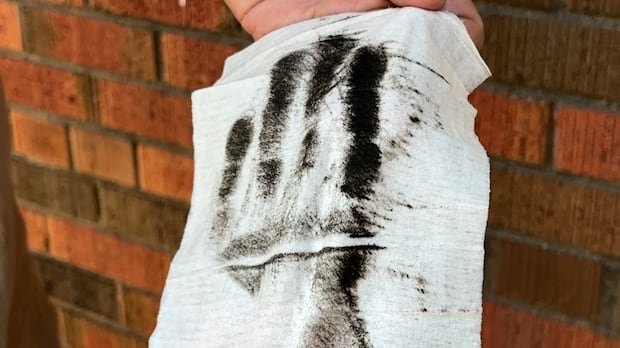

Emissions originating from Birla Carbon’s manufacturing activities were identified as a significant contributor to the deposition of soot in Hamilton neighborhoods last month, as per Ontario’s Ministry of the Environment, Conservation and Parks (MECP). The long-standing issue of black dust settling over Hamilton neighborhoods, particularly those near the eastern industrial zone, has been an ongoing concern for years. However, residents and local officials noted a notably heavy soot fall in early July that impacted areas not typically affected.
The excessive soot accumulation, which coated residences and affected pets and children, prompted numerous residents to urge elected leaders to address the issue. Subsequently, ministry spokesperson Lindsay Davidson informed CBC Hamilton that Birla had been referred for a formal investigation by the ministry’s environmental investigations and enforcement branch for potential violations of Ontario’s environmental regulations.
Birla Carbon stated its full cooperation with the ministry’s investigation. In response to inquiries regarding the cause and nature of the emissions, company spokesperson Roysten Dmello indicated that they had not received any communication or report from MECP detailing the findings. The company’s sole Canadian facility, located on Parkdale Avenue N., is engaged in carbon black production, operating across 14 countries. Carbon black is a finely powdered material used in the manufacturing of various products, such as rubber and plastic.
Following the analysis and sample results shared with Hamilton Public Health, the ministry emphasized the necessity for Birla Carbon to undertake all essential measures to prevent future incidents. Public health officials are currently evaluating the findings in collaboration with toxicological experts to identify any potential health implications and plan to release a comprehensive assessment shortly.
While the specific contents of the July emissions linked to Birla Carbon have not been disclosed, a proposed government standard for the carbon black sector from 2023 highlighted Ontario’s carbon black facilities as major sources of sulphur dioxide emissions, particularly in Sarnia and Hamilton, where these facilities are situated. The standard underscored the adverse health effects associated with short-term exposure to sulphur dioxide, including respiratory distress and cardiovascular complications.
Councillor Tom Jackson reported an unprecedented number of soot complaints from approximately 45 residents in his Ward 6, with many attributing the issue to Birla Carbon. Jackson urged company officials to engage with affected residents and proposed imposing a substantial fine on the company, with the funds potentially allocated to reimburse residents for cleaning-related expenses. Despite the historical significance of industrial jobs in Hamilton, Jackson advocated for enhanced corporate accountability to prevent future occurrences of soot fallout.
The ministry’s disclosure coincided with the report by McMaster University researchers, who studied soot samples from 50 Hamilton homes in 2024 and 2025. The researchers identified toxic chemicals consistent with coal combustion, with elevated levels of dust and polycyclic aromatic hydrocarbons (PAHs) near the northeast industrial area of Hamilton. While the study did not exhaustively investigate all potential sources contributing to the soot, coal combustion was highlighted as a significant factor in generating the observed PAHs.