

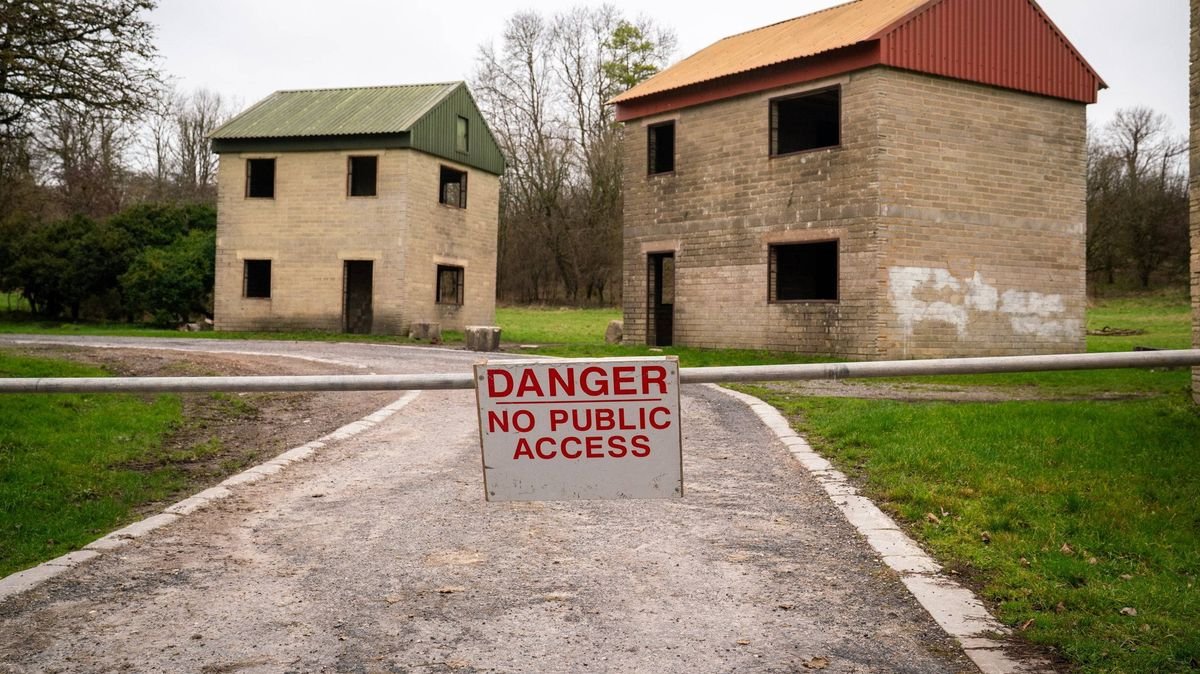

Step into the abandoned village of Imber, which was emptied 82 years ago to aid the fight against the Nazis. In 1943, the residents of Imber, located in Wiltshire, were forced to leave their homes to make way for military training grounds for soldiers. Approximately 150 locals were given a mere 47 days to evacuate, with promises of being able to return post-World War Two.
Despite the passage of over eight decades, Imber remains under the control of the Ministry of Defence (MoD), with limited public access restricted to just 12 days annually. These days include Easter, one summer day, a pre-Christmas carol service, and the current period, from 8 am on December 29 to 8 am on January 2.
While many original homes in Imber have succumbed to the elements, the core structures of the Grade I-listed St Giles Church and the former inn still endure. Neil Skelton, a 77-year-old from Wilton who serves as the guardian, notes a steady flow of visitors to the church each year, with doors open daily from 11 am to 4 pm.
Entry during the open periods is free, with any donations directed towards the upkeep and restoration efforts of the Churches Conservation Trust (CCT). Neil highlights the significant visitor numbers during peak times, mentioning the historical intrigue and the abundant wildlife as major draws.
Neil, who dedicated thirty years to the CCT before transitioning to a volunteer role, expresses his fondness for the serene ambiance of the deserted village, particularly enjoying the bustling open days. The church generates funds through the sale of refreshments and souvenirs, yielding an impressive £15,000 to £20,000 annually.
Reflecting on his journey with Imber, Neil reminisces about cycling to the village as a teenager in 1964, an experience that sparked his fascination with the place. Despite the village’s desolate appearance, Neil finds it to be a peaceful and charming environment, emphasizing the vast training area and the camaraderie among the volunteer team.
Imber’s cottages have deteriorated over the years, primarily due to the decay of thatched roofs and damage caused by military exercises. Many structures lie in ruins or serve as windowless facades for military drills, adding to the village’s eerie allure. Despite this, Neil maintains that Imber is a tranquil and rewarding setting for his volunteer work.
Neil concludes by underlining the beauty of Imber in its quiet moments, relishing the solitude and the harmonious teamwork among the volunteers.