

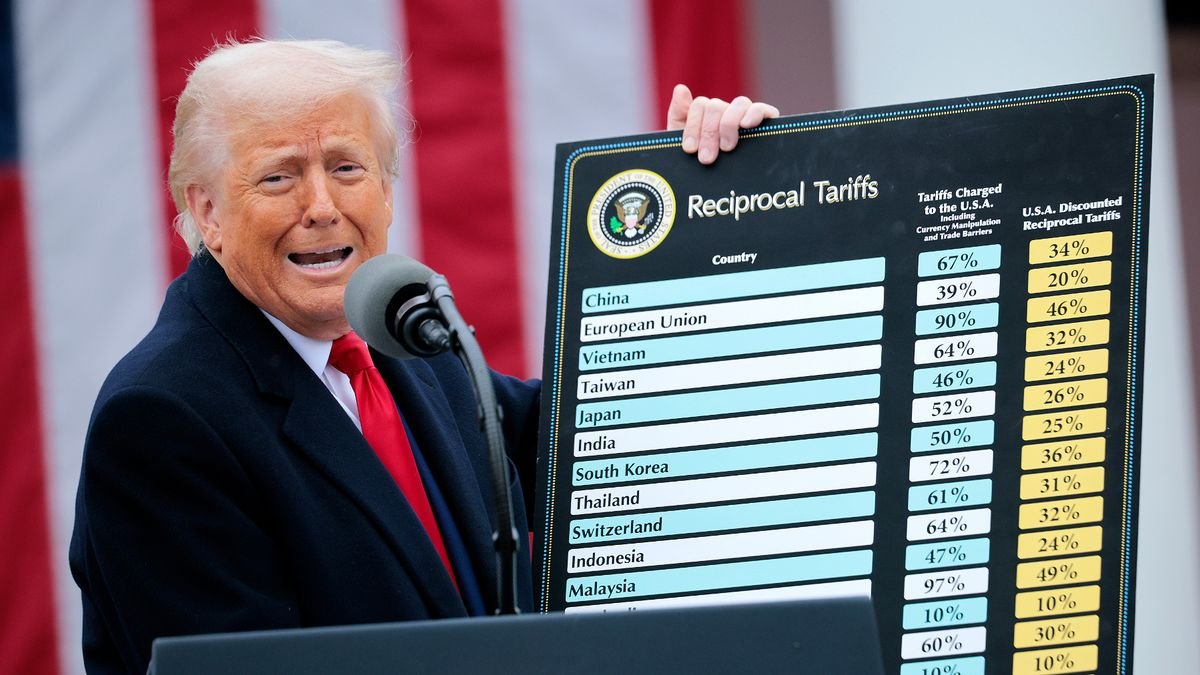

Donald Trump issued a warning that the United States would face severe consequences if the Supreme Court deemed his tariffs illegal. Recent developments from the Supreme Court shed light on this warning.
Recollect a moment about six months ago when Trump imposed tariffs on all nations globally, even those with minimal economic ties. Following a prolonged legal battle, the highest court in the land declared these actions unlawful, emphasizing that tariff decisions should be sanctioned by Congress as per the US constitution.
Despite this constitutional provision, Trump sought to bypass the congressional approval process by invoking an old “emergency” law to unilaterally impose tariffs, citing it as a means to swiftly execute his policy agenda.
The foundation of Trump’s policies, spanning from fiscal strategies to international relations, heavily relied on his ability to levy tariffs at will. The mere threat of imposing tariffs, often communicated via social media, enabled him to coerce other nations into complying with his demands.
The recent ruling has exposed the illegality of Trump’s tariff actions and raises questions about the future course of action. Trump’s administration is expected to explore alternative avenues to continue imposing tariffs, although legal experts suggest that the ruling is extensive and may not easily permit loopholes.
If Trump fails to devise an alternative plan, various companies, including Costco, Chinese automaker BYD, and camera manufacturer GoPro, are poised to seek refunds from the government for import duties paid in the past half-year, potentially amounting to substantial financial reimbursements.
In addition to the financial implications, the Supreme Court’s decision has significantly impacted Trump’s international leverage. The reduced ability to threaten with lower tariffs for limited durations weakens his bargaining power on the global stage, marking a significant setback for his administration.
Moreover, the ruling symbolizes a notable resistance from the Supreme Court, challenging Trump’s unchecked authority. Despite appointing conservative justices, the court ruled against Trump by a margin of six to three, signaling a shift towards increased judicial oversight over executive actions.
Mikey Smith serves as the Mirror’s US Political Editor, reporting from Washington and Westminster to cover the latest developments during Donald Trump’s second term in office.