

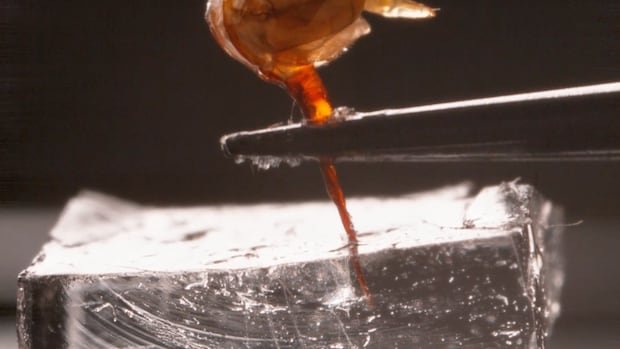

Recent research published in the Proceedings of the National Academy of Sciences has uncovered new insights into the effectiveness of the stinger of a western honey bee (Apis mellifera). The study utilized high-speed cameras to capture the intricate mechanism of the bee’s stinger in action, shedding light on its unique design.
Lead author Fiorella Ramirez Esquivel, a postdoctoral researcher at Macquarie University, highlighted the significance of being able to film the bee stinger in action, thanks to modern camera technology. By filming at hundreds of frames per second, researchers were able to observe the stinger’s rapid deployment and venom delivery process.
The experiments involved live honey bees, with researchers removing the stinger and promptly studying its function. The study revealed a double-piston design in the stinger, where specialized valves work in tandem to drive the stinger deeper while continuously pumping venom into the target. This complex mechanism differs from a standard car engine, showcasing the intricate nature of the bee’s defense system.
The study also explored the evolutionary significance of the honey bee’s stinging apparatus, emphasizing its role in defending the larger colony. Honey bee stingers release pheromones to recruit other bees during an attack, showcasing a coordinated defense strategy. The research suggests that the stinger’s barbs and continuous penetration enhance the bee’s ability to ward off threats, although effectiveness may vary against tougher skin or fur.
The findings not only provide insights into the unique design of the honey bee stinger but also raise questions about other honey-producing bee species and their defense mechanisms. The study’s implications extend beyond understanding bee behavior, potentially offering insights for medical applications in the future.