

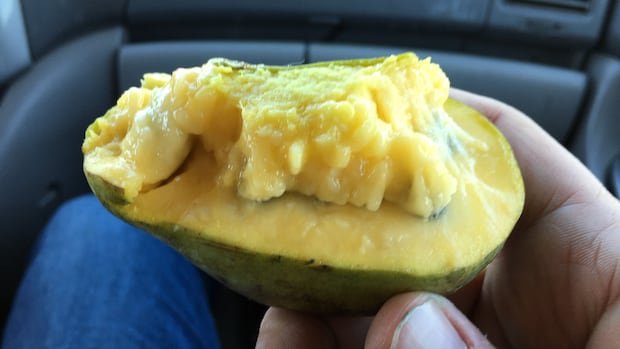


It may come as a surprise to many that the exotic-flavored pawpaw fruit thrives in Canada. Chef Tawnya Brant assures that experiencing this fruit is a delight if you can get your hands on one.
Brant, the proprietor of Yawékon Foods and the host of APTN’s One Dish One Spoon, describes pawpaw as a blend of banana, mango, and pineapple flavors with a creamy texture that turns almost caramel-like as it matures.
According to Brant, the pawpaw resembles a peculiar version of a banana – shorter, plumper, and oval-shaped, containing large seeds within.
Pawpaws have thrived in North America for centuries, primarily in regions spanning from Florida to Missouri and southern Ontario. They were extensively cultivated by Indigenous communities before European settlement but receded as forests were cleared for agriculture. Despite this, wild pawpaw trees still exist, producing fruit in the autumn in certain regions of southern Ontario, British Columbia, and Quebec.
One of the main reasons pawpaws are not widely recognized is their short shelf life and susceptibility to browning and bruising post-harvest, complicating large-scale commercial cultivation and distribution.
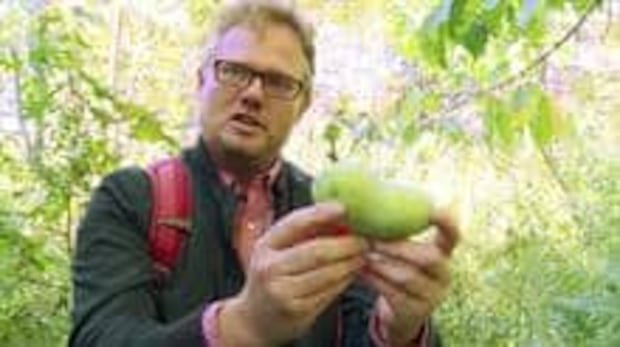
Exploring wild pawpaws in a discreet location near London, Ontario, with forager and ecologist Mathis Natvik.
Brant’s initial encounter with pawpaws occurred approximately a decade ago when a friend brought some to her late mother’s garden. Prior to that, she had heard about the fruit and the history of Haudenosaunee tribes transporting the trees up the eastern seaboard over centuries due to their fondness for them.
She reminisces about tales of children floating on rafts down creeks to collect pawpaws, emphasizing that it was a rare annual delicacy that lacked preservation methods.
The secret to cultivating pawpaws? Llama dung
About 15 years ago, Thomas Mathias began growing