

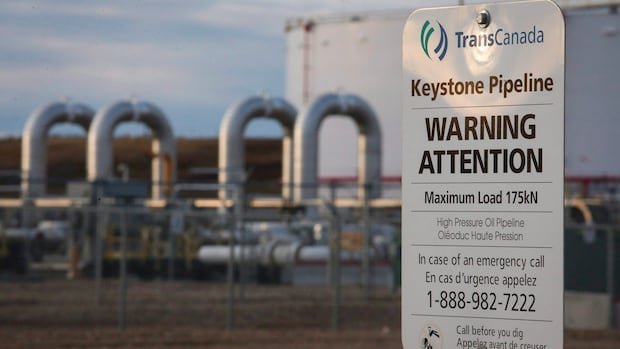

U.S. President Donald Trump has mentioned that a controversial oil pipeline initiative is being resurrected while Canada and the United States are in ongoing discussions to prevent additional U.S. tariffs on Canadian products. Trump expressed on his Truth Social platform that the Keystone XL Pipeline, previously terminated by President Joe Biden, might be revived. He also shared an image, created by artificial intelligence, depicting him lifting a large pipeline labeled “KEYSTONE” from a grave, with two American flags in the background and a headstone stating, “Buried by Biden.”
Canada has not issued a public response to Trump’s statement about the project revival within the trade negotiations. On Tuesday, Washington announced a temporary halt on planned 50% tariffs on various Canadian goods for three days to facilitate further talks.
Key dates in the history of the Keystone XL expansion include its initial proposal in July 2008 during Prime Minister Stephen Harper and U.S. President George W. Bush’s tenures. The National Energy Board approved TransCanada’s Keystone XL application in March 2010, subject to 22 conditions focusing on safety, environmental protection, and landowner rights. Following an extended review, the State Department released its final environmental assessment on August 26, 2011, indicating limited environmental impact.
Protests against the project escalated in August-September 2011, leading to civil disobedience campaigns at the White House. The U.S. State Department later demanded TransCanada to reroute the pipeline to avoid ecologically sensitive areas in Nebraska. President Barack Obama rejected the Keystone XL in January 2012, citing insufficient review time due to imposed deadlines by legislators.
Subsequent events saw legal challenges, application submissions, and rejections until the project faced indefinite suspension in April 2014. The narrative continued with court battles, legislative approvals, and subsequent veto actions, culminating in the Obama administration’s rejection of the project in November 2015.
Trump’s presidency brought renewed hope for the Keystone XL, with executive orders and permits issued to advance the project. However, legal blocks and environmental impact studies delayed progress. Alberta’s investments, construction commencements, and Biden’s subsequent permit revocation marked significant developments in the project’s trajectory.
Recent actions include TC Energy’s termination of the Keystone XL in June 2021 and subsequent claims for damages under NAFTA agreements. The saga continued with legal disputes, government settlements over oil spills, and Trump’s latest indication of potentially reviving the project amid tariff negotiations with Canada.