

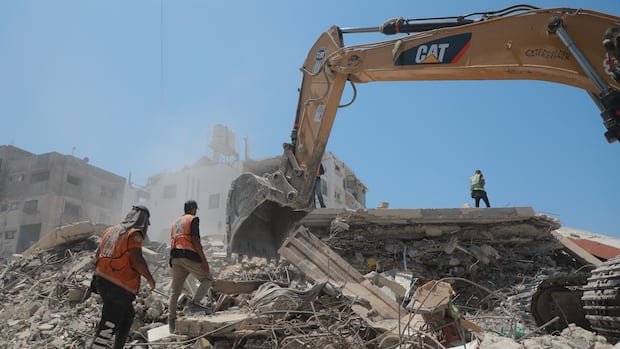

In the heart of Gaza City, members of the Al-Drimli family are engaged in a painstaking search for their neighbor’s remains in the debris of their former residence. Armed with only basic tools like shovels, buckets, and a wheelbarrow, they toil under the scorching midday sun, working in silence while the clatter of shovels hitting rubble and the hum of an electric saw resonate in the air.
Despite their efforts, the meager progress made by filling the wheelbarrow with debris and moving it to a nearby pile barely makes a dent in the extensive wreckage left behind by the airstrike that leveled the six-story building back in November 2023.
Having already recovered the remains of their own family members, the Al-Drimli family now focuses on locating the missing neighbor who sought refuge with them during the tragic incident. The Gaza Health Ministry estimates that thousands of bodies, between 8,000 and 10,000, remain trapped under the rubble nearly three years after the conflict between Israel and Hamas began.
Due to the scarcity of excavators in Gaza, many Palestinians, like the Al-Drimli family, have resorted to manual labor to search for their loved ones as heavy machinery remains limited and costly. Officials and equipment operators in Gaza confirm the severe shortage of functional excavators in the region, with only a handful still operational. The machines face challenges in maintenance and repair due to the lack of spare parts, oil, and fuel, further impeding the recovery efforts.
Samir Sabra and his son, Uday Sabra, operate two of the few functioning excavators in Gaza but struggle with the high operational costs, especially for essential resources like oil. The dire situation hampers their ability to meet the overwhelming demand for their services, with many more bodies awaiting recovery from the rubble.
Civil Defence spokesperson Mahmoud Basal reveals that heavy machinery in Gaza was deliberately targeted during the conflict, significantly reducing the available equipment for search and rescue operations. Despite promises in past ceasefire agreements to facilitate the entry of machinery and equipment for rubble clearance, the situation on the ground remains unchanged, prolonging the arduous process of retrieving the deceased.
Humanitarian aid groups and the United Nations have raised concerns about Israeli restrictions on essential supplies like fuel and spare parts, hindering the maintenance and operation of crucial machinery in Gaza. The international community is urged to intervene and facilitate the entry of equipment to expedite the recovery efforts and provide closure to the families of the victims.
Despite the challenges, Uday Sabra and other volunteers persist in their mission to unearth the remains of the deceased and offer them a dignified farewell, emphasizing the urgent need for more resources to expedite the recovery process in Gaza.