

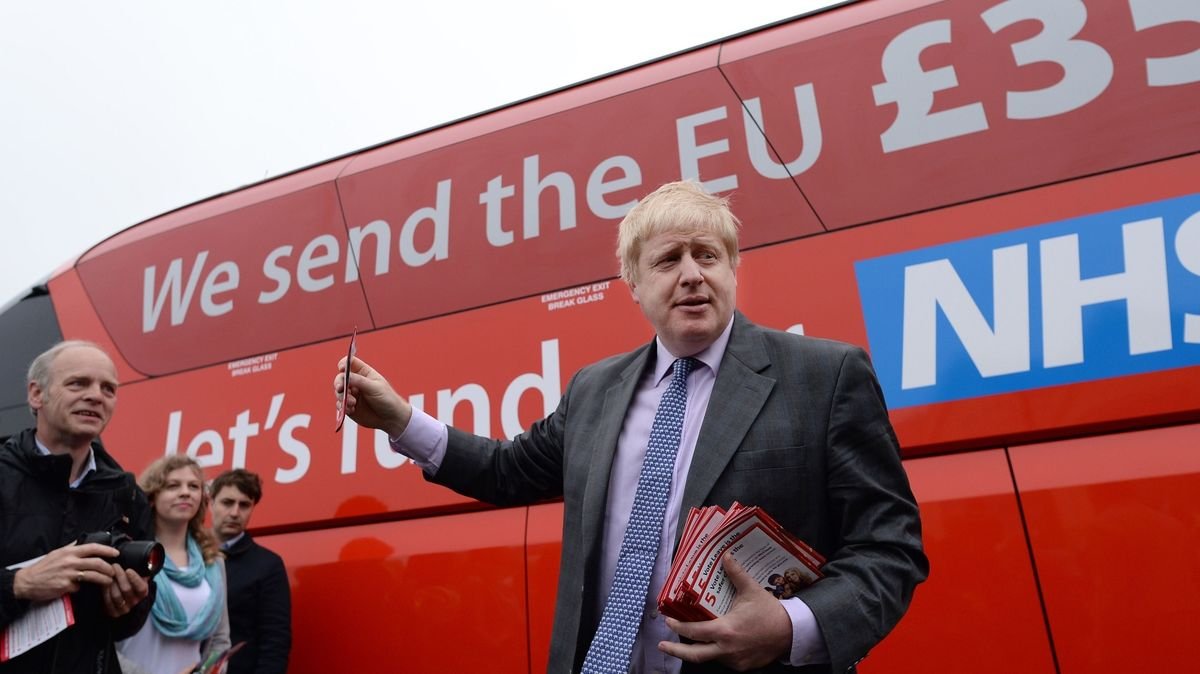

Michael Gove has stood by the contentious Brexit bus slogan that claimed £350 million was being sent to the EU weekly and should instead be allocated to the NHS. Gove, a prominent figure in the Leave campaign, insisted that the figure was accurate, despite acknowledging the divisive nature of the Brexit debate that hinders persuasion. He acknowledged that the bus advertisement, stating “We send the EU £350 million a week, let’s fund our NHS instead,” continues to provoke strong reactions.
In response to fact-checking from Full Fact, which has raised doubts about the claim, Gove dismissed their analysis. Full Fact has clarified that the UK never actually paid £350 million a week to the EU and did not owe such a sum to the bloc, emphasizing the economic repercussions of Brexit on trade and the UK economy.
Recent analysis has revealed that Brexit has had a significant and lasting negative impact on the UK economy. According to the think tank UK in a Changing Europe, Brexit has led to a decrease in UK GDP per capita by 6–8%, reduced investment by 12–18%, lowered employment by 3–4%, and decreased productivity by 3–4%.
Despite facing criticism, Gove remains unapologetic about the £350 million bus claim, stating that it underestimates the amount the EU took from UK taxpayers. He maintained that the claim was extensively debated and argued over during the Brexit campaign.
When questioned about whether the £350 million promised for the NHS post-Brexit actually materialized under the Tories, Gove asserted that more funding went to the health service. He acknowledged the difficulty in convincing people of the truth amid the polarized Brexit debate.
Gove defended the bus claim, asserting that it was accurate and even a prediction that turned out to be true, as more than £350 million a week was eventually allocated to the NHS. He disagreed with Nigel Farage and emphasized the positive impact the increased funding had on the NHS, despite the political consequences for the Conservatives.
Gove’s unwavering support for the controversial slogan underscores the enduring debate surrounding Brexit and its economic implications.