

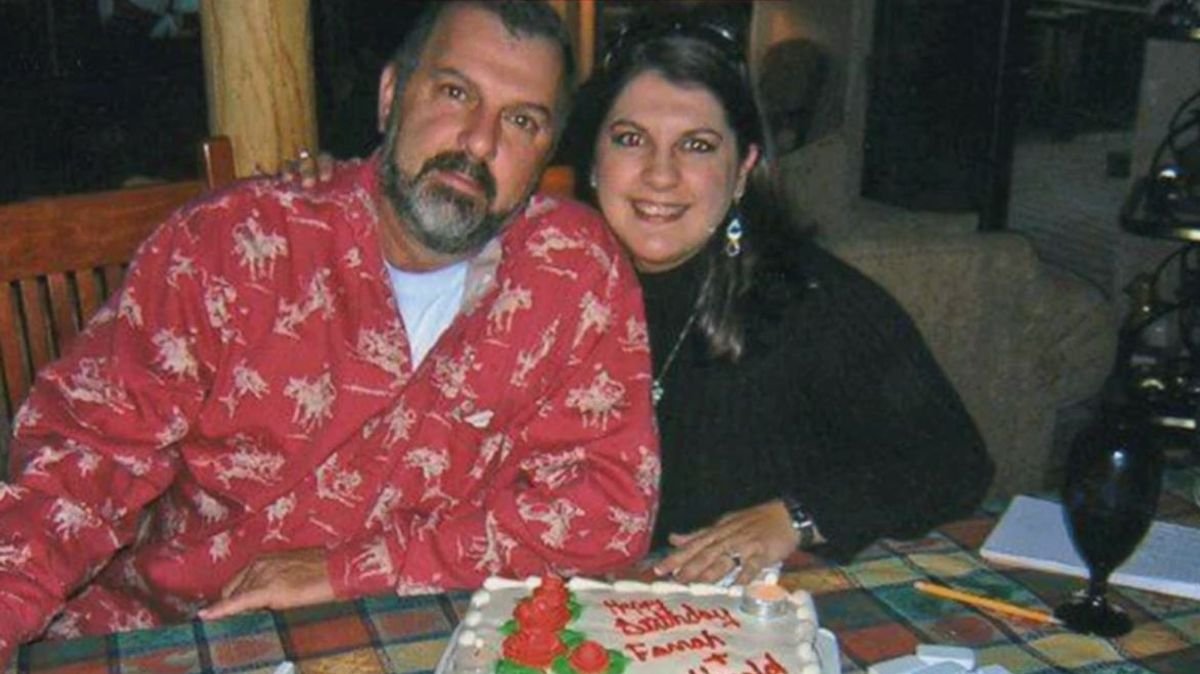

A woman has shared the shocking experience of receiving a call from law enforcement informing her that her father’s head, along with more than 100 other bodies, was found in a warehouse, despite the family believing he had donated his body to science.
Farrah Fasold’s father, Harrold Dillard, passed away from cancer at 56 in 2009. Before his death, a company named BioCare approached him at a hospice, asking if he would donate his remains for medical research purposes.
Describing her father’s enthusiasm for the donation, Farrah mentioned that he saw it as a way to alleviate the burden on his family and viewed it as a final selfless act. The family was assured that any unused body parts would be cremated, and his ashes would be returned to them at no cost.
Shortly after his death on Christmas Eve in 2009, his body was collected from the hospice. Months later, Farrah was devastated to learn that the police had discovered her father’s head.
Expressing her distress, Farrah stated that they would not have agreed to the donation if they had known about the possibility of body parts being sold. The detective investigating the case revealed that the bodies had been dismembered using a coarse cutting instrument, suggesting a company involved in acquiring bodies for profit rather than fulfilling the promised cremation.
Farrah believed that her father’s body was disrespected and mutilated contrary to the company’s assurances. The practice, known as “body brokering,” involves companies acting as intermediaries that acquire human remains, use what they need, and sell the rest.
Many individuals, like Farrah’s father, donate their bodies in good faith to support medical science, unaware that they may end up being commercial commodities in a poorly regulated market. Unlike organ and tissue transplant industries regulated by the U.S. government, the trade of cadavers and body parts for research or educational purposes lacks federal oversight.
State laws offer minimal supervision, allowing almost anyone to dissect and sell human body parts without stringent regulations. This unregulated environment has drawn comparisons to historical grave-robbing practices, highlighting the urgent need for improved oversight and ethical standards in the handling of human remains.