

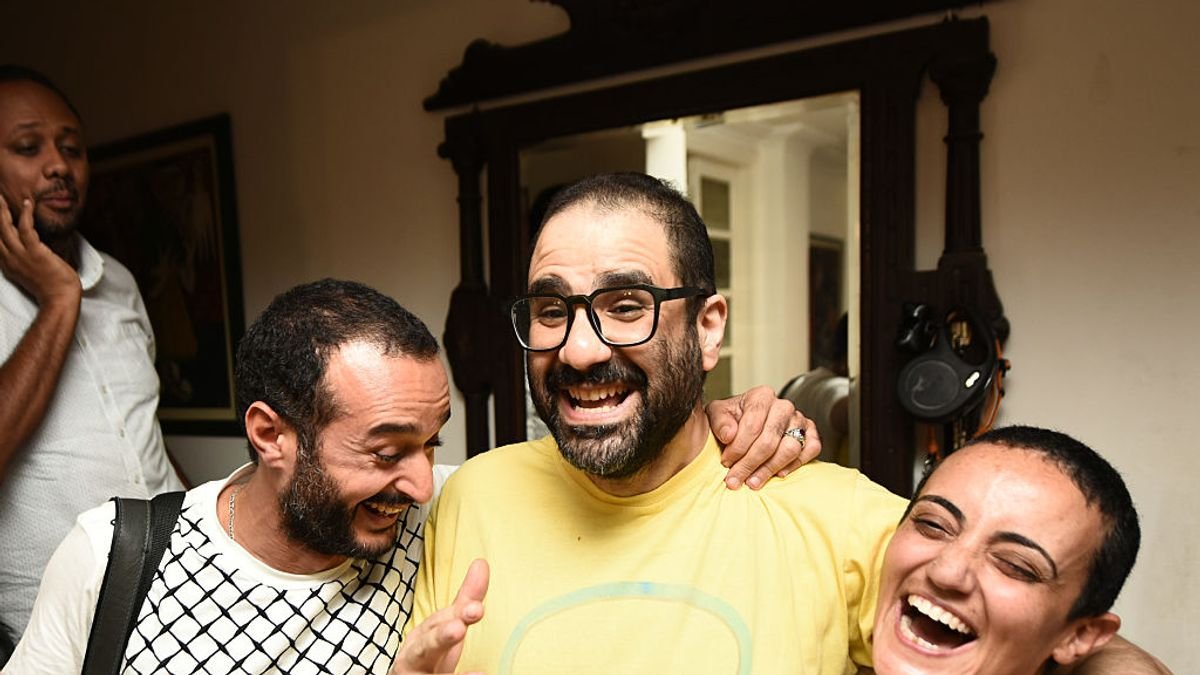

An individual from the UK who was previously held in Egypt against his will has issued a full and unconditional apology for past tweets that seemed to endorse violence against Zionists.
Alaa Abd El-Fattah, who was detained for six years on charges related to spreading false information about the government, has now been reunited with his son in the UK. His presence in the country was supported by Keir Starmer, despite recent revelations of controversial posts from 2010. The Government has denounced El-Fattah’s expressed views as “reprehensible”.
Chris Philp, the Conservative shadow Home Secretary, condemned El-Fattah as a “despicable scumbag” and demanded the revocation of his citizenship. The British-Egyptian dual national, known for his role in the Arab Spring protests and hunger strike while in custody, made comments in 2010 glorifying the killing of Zionists, stating the need for more such actions.
In addition, El-Fattah disparaged British individuals in past online posts. He expressed regret over the resurfacing of these tweets at a time when he was reuniting with his family after many years. El-Fattah acknowledged the hurtful nature of his remarks and issued a direct apology for the offensive content.
El-Fattah attributed some of his statements to youthful anger during turbulent times in the region, including conflicts in Iraq, Lebanon, and Gaza, as well as increased police brutality against Egyptian youth. He admitted that some of his comments were made thoughtlessly during online arguments without considering their impact on others.
There had been ongoing efforts by both Conservative and Labour administrations to secure El-Fattah’s release. The United Nations investigators had denounced his imprisonment as a violation of international law. Following a pardon by Egyptian President Abdel-Fattah el-Sisi, El-Fattah was able to travel to the UK on Boxing Day, ending a period of restricted movement.
El-Fattah took the accusations of antisemitism seriously and clarified that some of his tweets had been misconstrued or taken out of context. He emphasized his commitment to LGBTQ rights and denounced sectarianism and racism as significant threats, citing his own advocacy for religious minority rights in Egypt.
The controversy surrounding El-Fattah’s past remarks drew strong reactions from political figures. Kemi Badenoch, a Conservative leader, criticized the nature of his statements, while Philp dismissed El-Fattah’s apology as insufficient, labeling him as reprehensible.
Having been granted British citizenship in December 2021, El-Fattah’s return to the UK was celebrated by some but raised concerns within the Jewish community due to his historical comments. The Foreign Office reiterated its condemnation of El-Fattah’s past tweets as unacceptable.
The Prime Minister, unaware of El-Fattah’s social media activity, had expressed pleasure at his return. Jewish organizations called for a thorough assessment of El-Fattah’s current beliefs to ensure the safety of Jewish communities in light of recent antisemitic incidents.
El-Fattah’s past online behavior had repercussions, including losing