

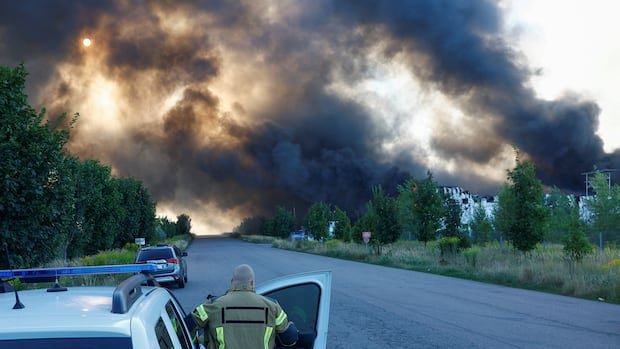

Russia launched a significant aerial assault on the Ukrainian capital of Kyiv and its surrounding area, using numerous missiles and drones in a nighttime attack that lasted for hours, resulting in the deaths of at least 16 individuals as per officials on Thursday.
The Russian forces have been increasingly targeting Kyiv with ballistic missile strikes, taking advantage of Ukraine’s limited supply of U.S.-made Patriot air defense systems, which are the only weapons capable of intercepting ballistic missiles in Ukraine’s arsenal.
Ukrainian President Volodymyr Zelenskyy has urgently appealed for more Patriot interceptors from other countries, but global stockpiles are low due to ongoing conflicts in Iran and Ukraine’s extended battle against Russia’s invasion.
The overnight assault by Russia included cruise missiles and high-speed jet-powered drones, putting additional pressure on Ukrainian air defenses, according to the Ukrainian air force.
Explosions were heard throughout the city as Kyiv bore the brunt of the attack, with hits recorded at 28 different locations across the country, resulting in around 40 injuries, as stated by Zelenskyy. Air raid warnings remained in effect until after daybreak.
Zelenskyy described the attack as “massive,” noting that Russia had been planning it for a long time by deploying various types of missiles and drones to maximize damage to civilian infrastructure.
In response to the assault on Kyiv, Poland activated its military aviation operations, ground-based air defense systems, and radar reconnaissance, while NATO military aircraft, including Spanish jets, were deployed to monitor airspace over Poland.
Meanwhile, Romania reported an unauthorized drone crash near its border with Ukraine. Ukrainian officials have highlighted Russia’s escalating aggression as a direct challenge to NATO and its allies, breaching the sovereignty of neighboring states and increasing the risks of its ongoing conflict.
Despite Ukraine’s urgent need for missile defense systems, the availability of U.S. Patriot interceptors has significantly decreased since the conflict began, although the Pentagon maintains a substantial inventory. The production capacity for interceptors is gradually increasing, with plans to ramp up production by Lockheed Martin in the coming years.
In Kyiv, residential buildings in multiple districts were struck by Russian airstrikes, resulting in significant damage to homes, medical facilities, and educational institutions. Emergency teams worked to rescue individuals trapped under debris, with reports of casualties and injuries.
Ukraine has also retaliated by targeting Russian oil facilities through long-range drone strikes, with the Russian Defense Ministry reporting the downing of Ukrainian drones over various Russian regions. The conflict between Russia and Ukraine continues to escalate, with both sides utilizing drones and missiles in an attempt to gain strategic advantages along the front line.