


As the sun set and a solar eclipse dimmed the sky over northern France recently, a group of people gathered at a bus stop along a highway, many of them carrying vivid orange life jackets. Among them were women and toddlers who had been camping in nearby woods for months, awaiting a chance to board a boat and cross the English Channel when weather conditions allowed. However, migrants revealed that crossing had become increasingly difficult, with reports of police obstruction and tear gas incidents.
For years, the coastal area spanning 40 kilometers between Dunkirk and Calais has served as a transit point for migrants moving through Europe. The fluctuating numbers of migrants making the journey are influenced by conflicts, changing migration routes, weather patterns, and evolving European policies. Despite an overall decrease in crossings, the boats are now carrying more migrants, navigating longer and riskier routes across the Channel. These developments coincide with heightened discussions around European migration, particularly following a surge of migrants storming the Spain-Morocco border in Ceuta in late July.
British politicians swiftly shifted their focus to migrants attempting Channel crossings. Nigel Farage, leader of the anti-immigration Reform UK party, proposed the Royal Navy tow boats back to France, although former Navy personnel deemed this plan unfeasible. British Prime Minister Andy Burnham visited Dover on August 2, emphasizing the need to control boat numbers and ensure safer migration routes while refraining from announcing specific policies.
In an effort to deter crossings, the UK increased funding for French police operations to £662 million ($1.2 billion CAD), deploying additional surveillance tools like drones, helicopters, and cameras to prevent unauthorized crossings. This heightened security presence has turned Calais into a quasi-border zone with authorities cracking down on departures and dismantling informal settlements, forcing migrants to move between forests, dunes, train stations, and beaches in search of opportunities to cross.
By the end of July, approximately 14,200 asylum seekers had crossed the Channel, fewer than the same period in 2025 when 25,436 made the journey. Despite deterrence efforts, volunteers from NGOs and citizen groups like Calais Appeal report that such measures do not reduce the number of people attempting the perilous voyage. Many migrants resort to riskier and crowded boat journeys due to the crackdown on more traditional routes.
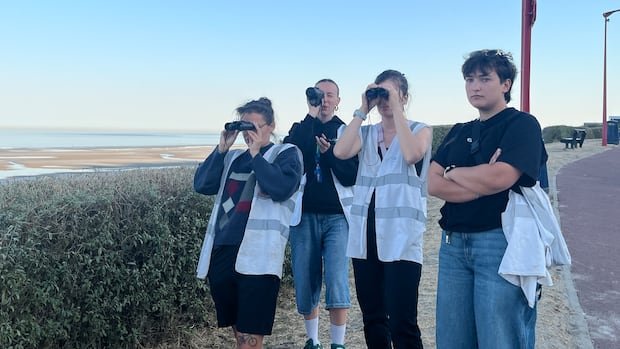
Humanitarian work conducted by citizens and volunteers plays a crucial role in aiding stranded migrants along the French coast. Groups like Utopia 56 patrol the northern coast, providing assistance to migrants after failed crossing attempts. The reliance on such grassroots organizations highlights gaps in official rescue and humanitarian operations due to inadequate funding.
Migrants’ quest for safety drives them to keep moving despite facing numerous obstacles. Mohammed, a migrant resting at a train station, shared his harrowing journey fleeing Gaza through multiple countries, driven by the hope of reaching his brother in the UK. The UK’s polarizing immigration policies and the rise of anti-immigration sentiment across Europe further complicate migrants’ journeys and settlement prospects.
Efforts to prevent migrants from crossing the Channel have garnered support from local officials like Mayor Stéphane Pinto of Ambleteuse, who views interception as a means of saving lives. However, tragic incidents, such as the discovery of deceased migrants on beaches, underscore the urgent need for comprehensive solutions to address the complex challenges of migration, driven by global conflicts and environmental changes.