

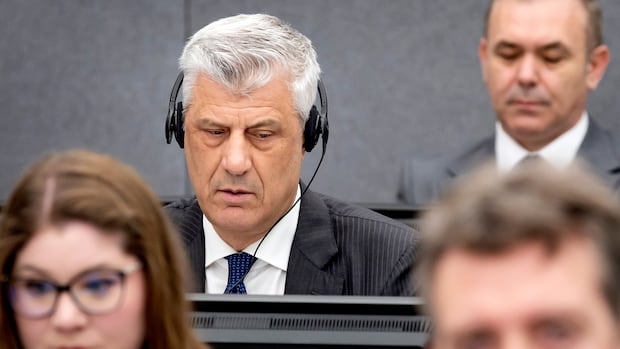

On Wednesday, a court supported by the European Union found former Kosovo president Hashim Thaçi guilty of four war crimes charges related to his nation’s fight for independence from Serbia, resulting in a 25-year prison sentence.
Thaçi stepped down from his position nearly six years prior to confront the allegations. He was convicted by a panel at the Kosovo Specialist Chambers of offenses including murder, torture, inhumane treatment, and unlawful detention.
At 58 years old, Thaçi has the option to appeal his sentence, as do the prosecutors. He faced trial alongside three other leaders of the Kosovo Liberation Army (KLA), who opposed Serb forces during the conflict from 1998 to 1999.
Dressed in a suit and tie, Thaçi remained silent as Judge Charles Smith announced the sentence.
The ruling represents a significant setback for a figure who was once welcomed by Western leaders, having been invited to peace discussions in France in 1999, and regarded as a potential leader to steer Kosovo towards independence.
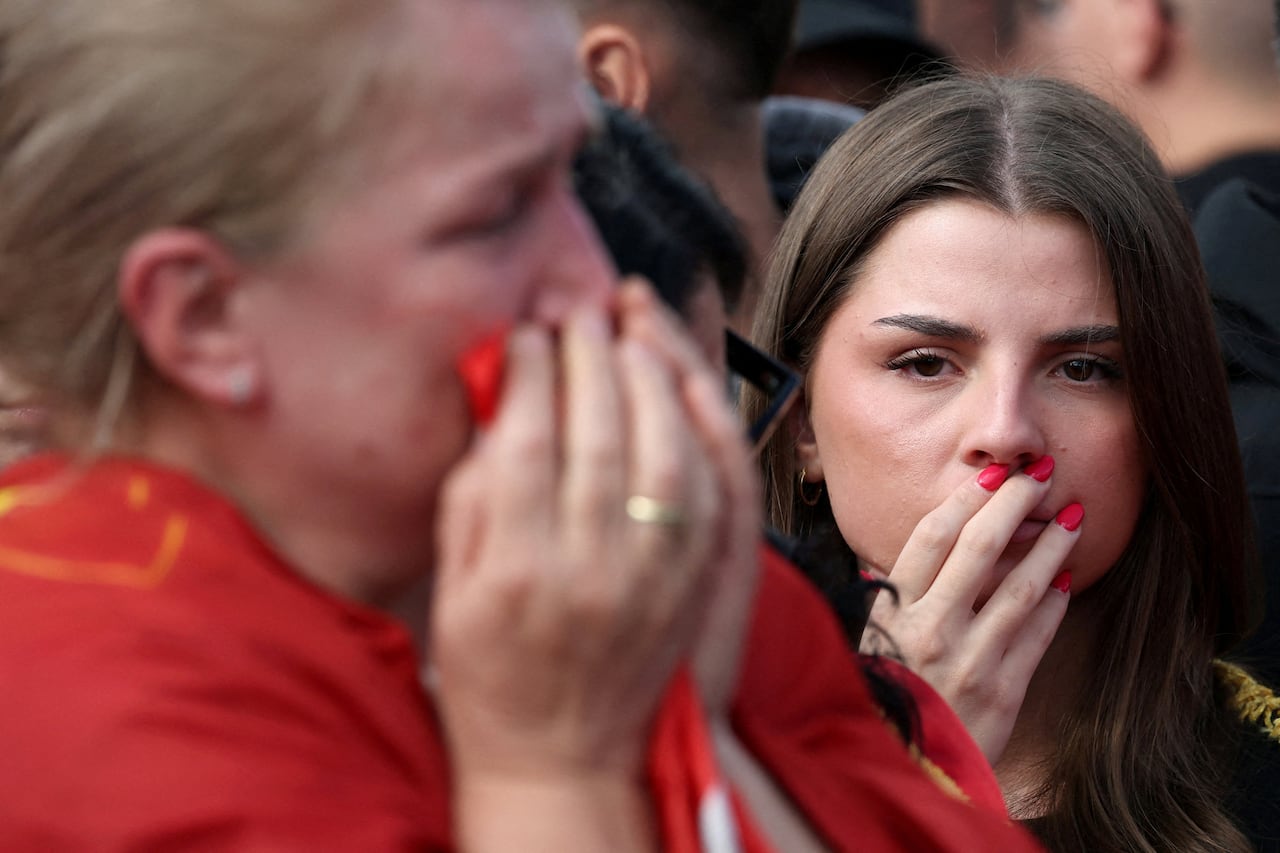
Supporters of former Kosovo president Hashim Thaçi react after he was found guilty of war crimes by the Kosovo war crimes tribunal. (Omar Havana/Reuters)
The KLA leaders on trial are widely viewed as national heroes. In Pristina, the capital city, thousands gathered to watch the verdict being read on a large screen, with many expressing shock at the outcome. Some began chanting “UCK,” the Albanian acronym for the Kosovo Liberation Army that Thaçi once led before his political career.
Supporter Bekim Fetahu described the ruling as “a catastrophic decision.”
“They [the judges] have equated the victims with the aggressors,” Fetahu remarked.
Outside the courthouse in The Hague, hundreds of Thaçi supporters awaited the verdict.
Acquitted of crimes against humanity
Judge Smith emphasized that the trial did not address the legitimacy of the Kosovo Liberation Army or its primary goal of achieving independence for Kosovo, which at the time was part of Serbia.
However, the American judge noted that Thaçi “exploited his position, authority, and influence” to incite crimes.
The court determined that Thaçi and his co-defendants targeted political adversaries and civilians viewed as collaborators and traitors while they were part of the KLA.
“In truth, there is no evidence that the victims in this case were spies or collaborators,” Smith stated. Merely having “Serbian friends or employment in Serbian firms was sufficient for them to be treated as enemy collaborators.”
The four KLA defendants were acquitted of six charges of crimes against humanity as the judges found that the prosecutors did not demonstrate that the crimes were part of a widespread and systematic assault on civilians.
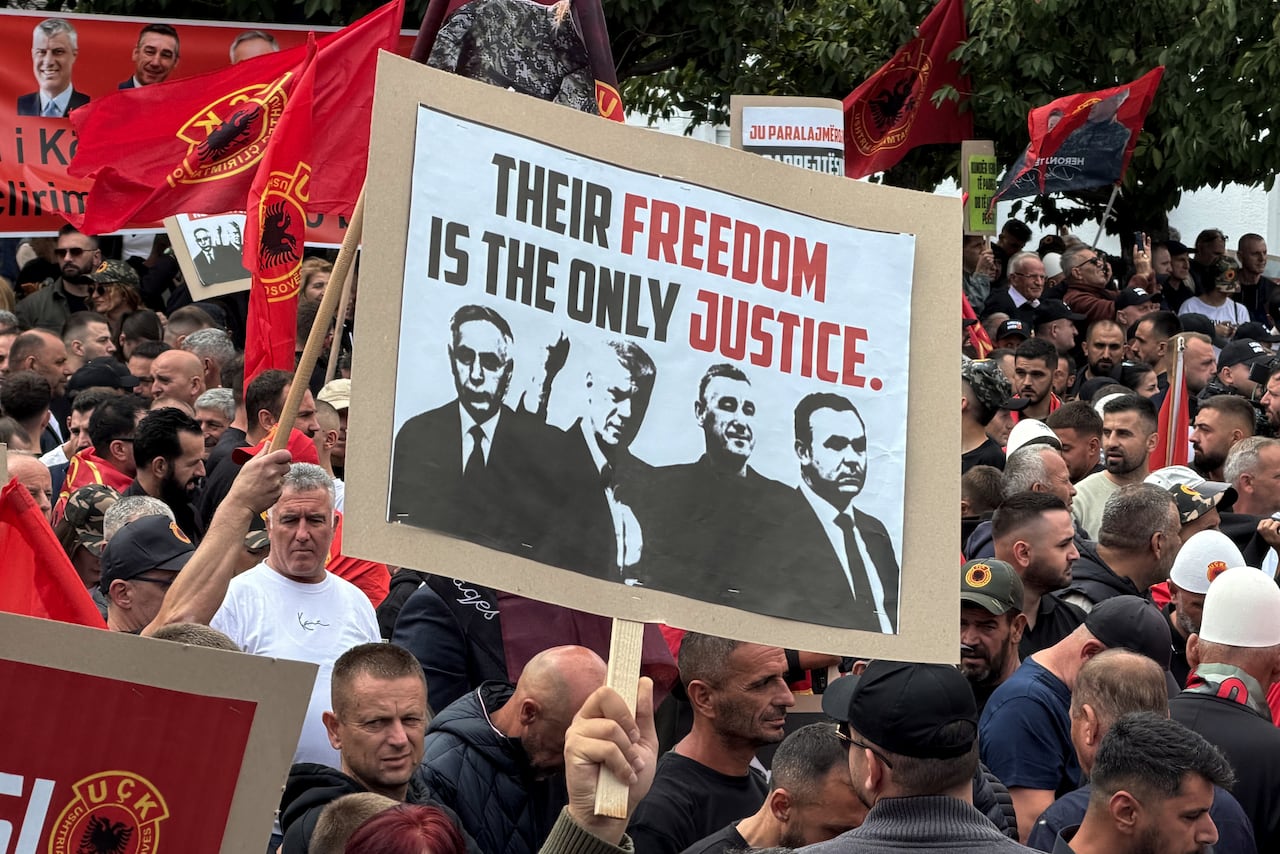
Demonstrators are shown Saturday in Pristina, with one holding a sign depicting Thaçi and the other defendants, Kadri Veseli, Rexhep Selimi and Jakup Krasniqi. (Zana Cimili/The Associated Press)
At the conclusion of his trial in February, Thaçi told the judges: “Throughout my life, I stood with the people of Kosovo, defending freedom, life, and dignity. I was consistently guided by the Western ideals of democracy, equality, and justice.”
Prosecutors sought the maximum sentence of 45 years for Thaçi and the other defendants, Kadri Veseli, Rexhep Selimi, and Jakup Krasniqi.
According to the prosecution, the men targeted political opponents and civilians perceived as collaborators and traitors during their time with the KLA. All defendants denied the allegations.
Veseli received an 18-year sentence, Selimi got 13 years, and Krasniqi was sentenced to 25 years in prison.
“This is a devastating ruling for Kosovo, our people, and our liberation struggle,” stated Kosovo’s Foreign Minister Glauk Konjufca, condemning the verdicts.
Over the weekend, thousands had also gathered in Pristina to show their support for the four men. The protesters filled a central square in the city, many waving red and black Albanian flags.
Images of the four former KLA leaders have been displayed throughout the city, accompanied by a large digital clock counting down to the verdict announcements.
In Serbia, President Aleksandar Vucic announced he would address the nation later on Wednesday.
Separate trial on intimidation charges
The personnel at the European Union-supported court are predominantly international due to concerns regarding witness safety. In 2022, the court found two leaders of a Kosovo war veterans’ association guilty of witness intimidation by releasing leaked confidential documents.
Thaçi is also scheduled to face a separate trial for witness intimidation later this month.
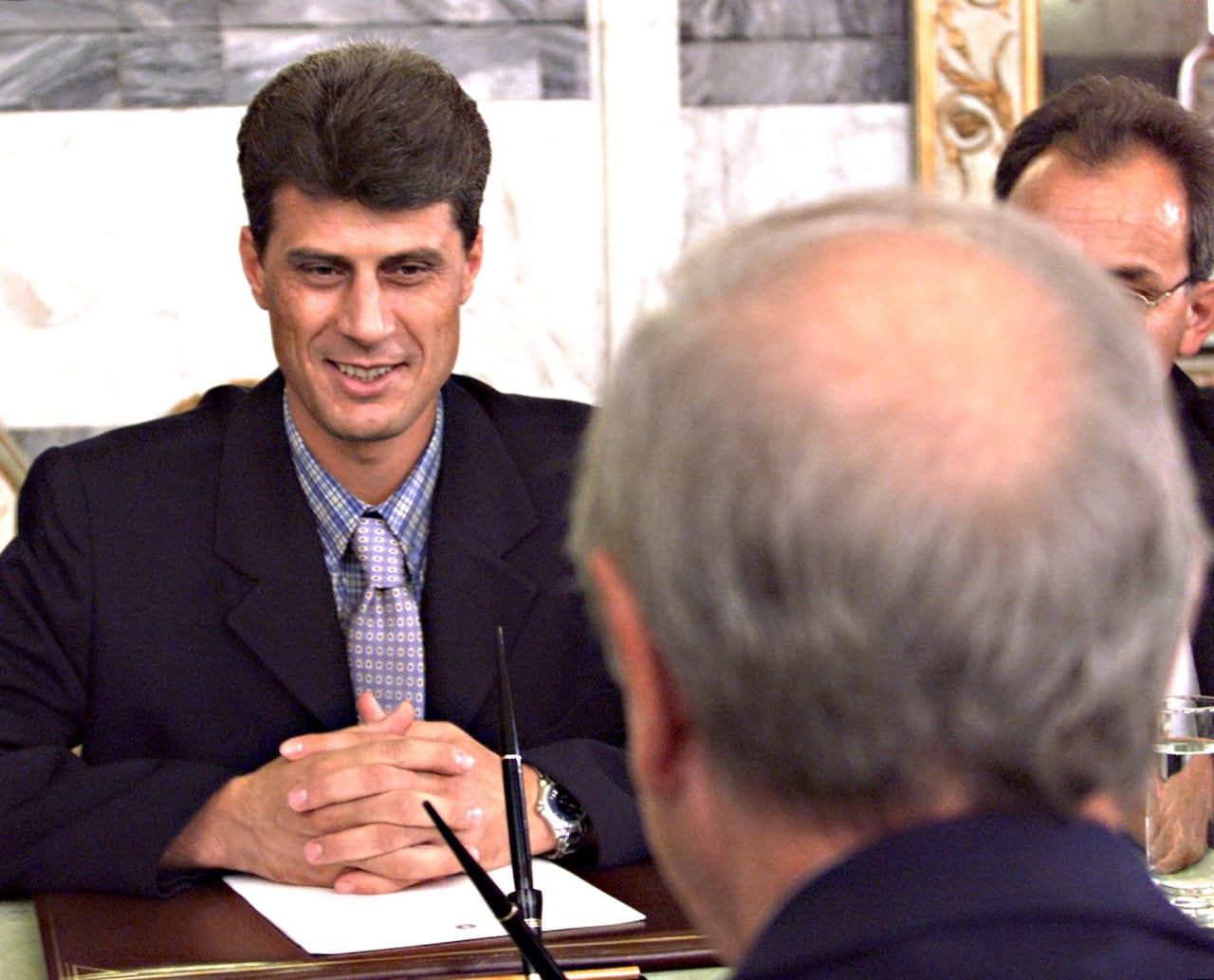
Thaçi is shown at a Sept. 3, 1999, meeting with officials, including Italian Foreign Minister Lamberto Dini. Thaçi was among the KLA figures involved in peace talks at the time. (Gabriel Bouys/AFP/Getty Images)
He was a student who returned from what he described as political exile in Switzerland to join Kosovo’s fight for independence. He earned the nickname “the Snake” for his skills in evading Serb forces during the conflict.
Thaçi ascended to political prominence following the war but stepped down as president to represent himself in court in The Hague.
Most of the 13,000 casualties in the Kosovo conflict were ethnic Albanians. A 78-day NATO air campaign targeting Serbian forces concluded the violence, leading to the displacement of about one million ethnic Albanian Kosovars.
In 2008, Kosovo proclaimed its independence from Serbia, a declaration that Belgrade continues to reject. Relations between Kosovo and Serbia remain strained, despite years of EU-mediated negotiations and support from the United States.