

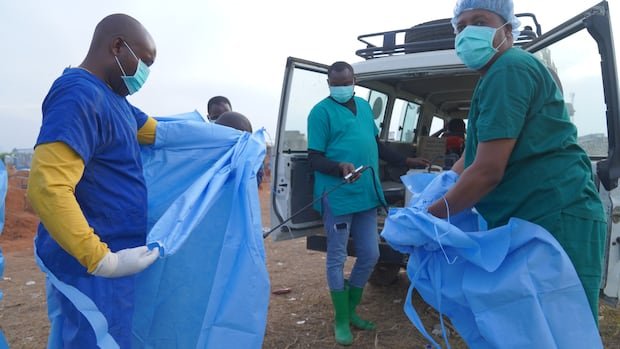

More than 2,500 individuals have lost their lives in the Ebola crisis in the Democratic Republic of Congo, which is rapidly spreading in an area larger than France, according to Julien Harneis, the senior United Nations Ebola co-ordinator. Harneis, speaking from Bunia in northeastern Congo via video call, emphasized the urgent need for additional assistance, as the current funding is expected to run out in a matter of weeks.
Health workers in the region have been facing hostility from local residents who are fearful and enraged by the outbreak. Tragically, some of these health workers have also contracted the disease and succumbed to it. The escalating situation has prompted a plea for more support from the international community.
In a recent development, a portion of a vaccine designed for a different strain of Ebola has been dispatched for advanced trials in the D.R.C. The country had requested these doses from the global Ebola virus disease vaccine reserve. The vaccine, known as Ervebo, is authorized for preventing infection from the common Zaire Ebola virus strain. Out of the 70,000 doses allocated, 20,000 will be utilized in a late-stage trial to assess its effectiveness against the current Bundibugyo virus strain.
The exponential growth of the Ebola outbreak has been a cause for concern, with the epidemic now spanning an area larger than France. This outbreak, caused by the Bundibugyo species of Ebola, poses significant challenges as there are currently no approved vaccines or treatments available. The dire situation is exacerbated by the region’s longstanding conflicts, leading to heightened humanitarian needs.
A distressing aspect of the crisis is the violence directed towards health workers and first responders. Harneis highlighted that 160 healthcare workers have fallen ill with Ebola, resulting in 43 deaths. The outbreak has also sparked attacks on medical facilities and ambulances by agitated individuals, reflecting the deep-rooted fear and mistrust in the community.
Furthermore, aid workers have encountered resistance fueled by conspiracy theories, with some locals believing the outbreak to be a hoax. This skepticism has led to confrontations when health guidelines prevent traditional burial practices. The challenges are compounded by a shortage of funding for humanitarian efforts and disruptions in financial services due to restrictions on commercial flights.
Addressing the multifaceted issues surrounding the Ebola crisis in the D.R.C. requires a coordinated and urgent response from both local authorities and the international community to contain the outbreak and provide essential support to those affected.