


In the past, Donald Trump frequently used age and mental acuity as key aspects of his political strategy. He relentlessly taunted Joe Biden with derogatory nicknames, insinuating that Biden was elderly, confused, and ill-suited for leadership. Trump not only criticized Biden’s endurance but also transformed it into a daily spectacle.
Now, with Trump returning to power at the age of 79, attention has shifted towards questioning Trump’s own mental state rather than focusing on Biden. Concerns about the President’s mental health are no longer limited to social media or partisan attacks. Diplomats, allies, and officials who have interacted with him face-to-face are quietly, and sometimes not so quietly, expressing worries about Trump’s mental well-being.
Reports indicate that apprehensions about Trump’s health are gaining more attention at various levels in European capitals. This escalating concern should raise significant alarms. Slovak Prime Minister Robert Fico, a political supporter of Trump, recently shared his concerns about Trump’s “psychological state” with fellow European leaders, following a meeting with the US leader.
Observers at the meeting described Fico as “shocked” by Trump’s behavior, with some even stating that Fico referred to Trump as “out of his mind.” Additionally, there were accounts of Fico appearing “traumatized” by the encounter, indicating that this was not an isolated incident.
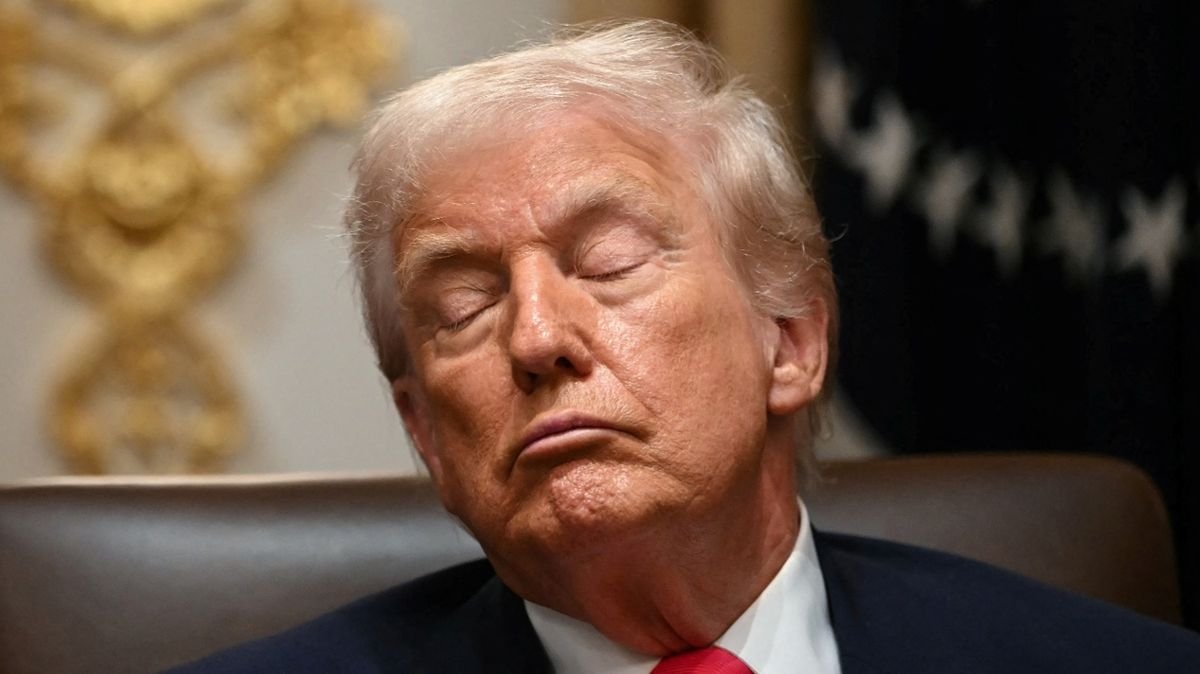
During a high-level White House meeting with fossil fuel industry executives, Trump’s attention noticeably drifted towards his ballroom construction project, leading him to divert from the discussion to admire the view from a window. This incident, along with reports of Trump falling asleep during critical meetings, including those with world leaders, suggests a concerning pattern of behavior.
While individual occurrences of fatigue or distraction may be common, repeated instances, coupled with increased irritability, incoherent speech, and potential memory lapses, present a troubling narrative that is challenging to dismiss as mere idiosyncrasies.
Physically, there are also disquieting signs, such as visible ankle swelling and frequent hand bruising on Trump. The White House has attributed the bruising to excessive handshaking and long-term aspirin use, while acknowledging a diagnosis of chronic venous insufficiency, a condition affecting blood flow common in older adults.
These indicators do not definitively prove mental decline. However, collectively, they emphasize a fundamental truth that Trump had previously disregarded concerning Biden: age and health play crucial roles, especially when global stability and nuclear capabilities are at stake.
What makes this situation particularly noteworthy is Trump’s prior actions. He openly criticized Biden for any perceived weaknesses, weaponizing moments of vulnerability for political gain. Now, as Trump’s own behavior raises significant concerns, he reacts defensively to scrutiny and criticism, showcasing a potential shift in temperament characterized by increased volatility and distractibility.
Trump’s recent actions, including impulsive threats and unpredictable behaviors, no longer appear as calculated provocations but rather as spontaneous outbursts. When even allies leave meetings feeling unsettled, it becomes essential to address these issues candidly. This is not about political point-scoring but rather a necessary inquiry into the fitness of the person holding the most powerful office in the world.
Silence and avoidance of uncomfortable truths pose the real danger in this scenario. If global leaders are already privately discussing Trump’s stability, then transparency and honesty are imperative for the public. The wellbeing of America and the world cannot afford to discover too late that the leader in charge was not as capable as presumed.
Trump’s past mockery of Biden has now been met with a different tone. The laughter has ceased, but the questions persist.