

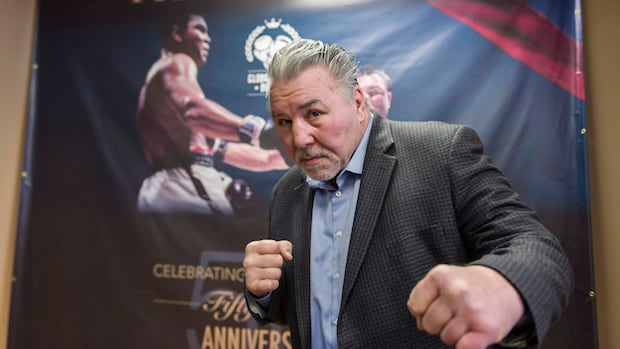

George Chuvalo, the legendary Canadian heavyweight known for his unyielding chin and ability to withstand the toughest blows in boxing, has passed away at the age of 89.
In his later years, Chuvalo battled dementia and had been living in a long-term care facility in Toronto. His death was reported on Saturday through various social media tributes from family and friends.
Ontario Premier Doug Ford, who described Chuvalo as a family friend, expressed his condolences online on Saturday.
“I am thinking of George’s family and loved ones as we grieve his loss,” he remarked.
Chuvalo fought valiantly against Muhammad Ali in matches held in Toronto and Vancouver, enduring the hardest punches from boxing legends Joe Frazier and George Foreman without ever hitting the canvas.
However, it was a devastating personal tragedy that brought him to his knees after his boxing career ended.
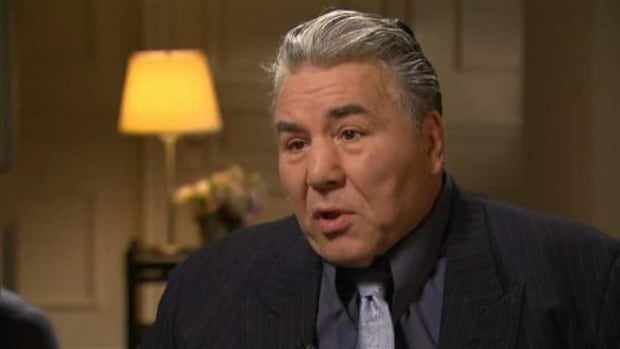
Peter Mansbridge interviews heavyweight champion George Chuvalo, discussing many of his iconic fights.
In his 2013 autobiography Chuvalo: A Fighter’s Life, co-authored with Murray Greig, he stated, “If you added up every punch I endured and multiplied that by 10,000, it wouldn’t even come close to the agony of losing three sons and a wife to drugs and suicide.”
Born on September 12, 1937, in Toronto’s Junction neighbourhood to Croatian immigrants, Chuvalo developed a fascination for boxing after spotting The Ring magazine at a newsstand.
At the age of 10, he first entered the boxing ring, and following a growth spurt coupled with an interest in weightlifting, he evolved into a fighter weighing 210 pounds and standing six feet tall.
After a short amateur stint, he turned professional in 1956, gaining recognition for his performances at the Jack Dempsey Tournament held at Maple Leaf Gardens.
However, by the early 1960s, Chuvalo’s career had plateaued under ineffective management until he came under the guidance of Toronto poultry magnate Irv Ungerman.
Chuvalo transformed several victories into a remarkable 11th-round stoppage against contender Doug Jones at Madison Square Garden in 1964. The following year, he returned to the iconic venue, narrowly losing a decision to former champion Floyd Patterson in a match that The Ring named the best of 1965.
‘He just keeps coming and coming’
Chuvalo’s fighting style was relentless yet not reckless. He pressed forward, delivering powerful punches to both the head and body, achieving stoppages in 88 percent of his victories.
“You can’t comprehend his strength,” Canadian fighter Bill Drover once remarked to a reporter. “There’s no way to halt him. He just keeps coming and coming. The only way to stop him is with a stick of dynamite.”
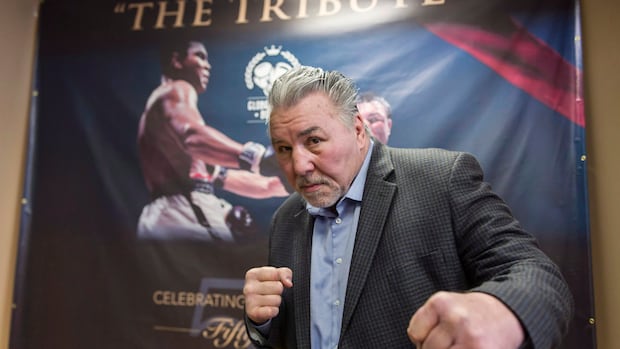
Canadian boxing legend George Chuvalo passed away at the age of 89 on Saturday. Renowned for never being knocked down in a professional fight, he faced off against former heavyweight champions Muhammad Ali, George Foreman, and Joe Frazier. Radio-Canada visited the gym where he trained, speaking with individuals who shared their memories of Chuvalo both in and out of the ring over the years.
Chuvalo consistently claimed that his defense was underrated, but it was his astonishing durability that stood out. He attributed his ability to absorb blows to a 17.5-inch neck strengthened through training.
In 1966, Chuvalo found himself contesting for the heavyweight title as a last-minute replacement when Ali’s ties with the Black Muslims and controversial stance on the Vietnam War led to his exclusion from the U.S. boxing scene.
The New York Times characterized the challenger’s prospects with a headline: Bettor’s-Eye View of Chuvalo: A Big Bum With a Lot of Heart.
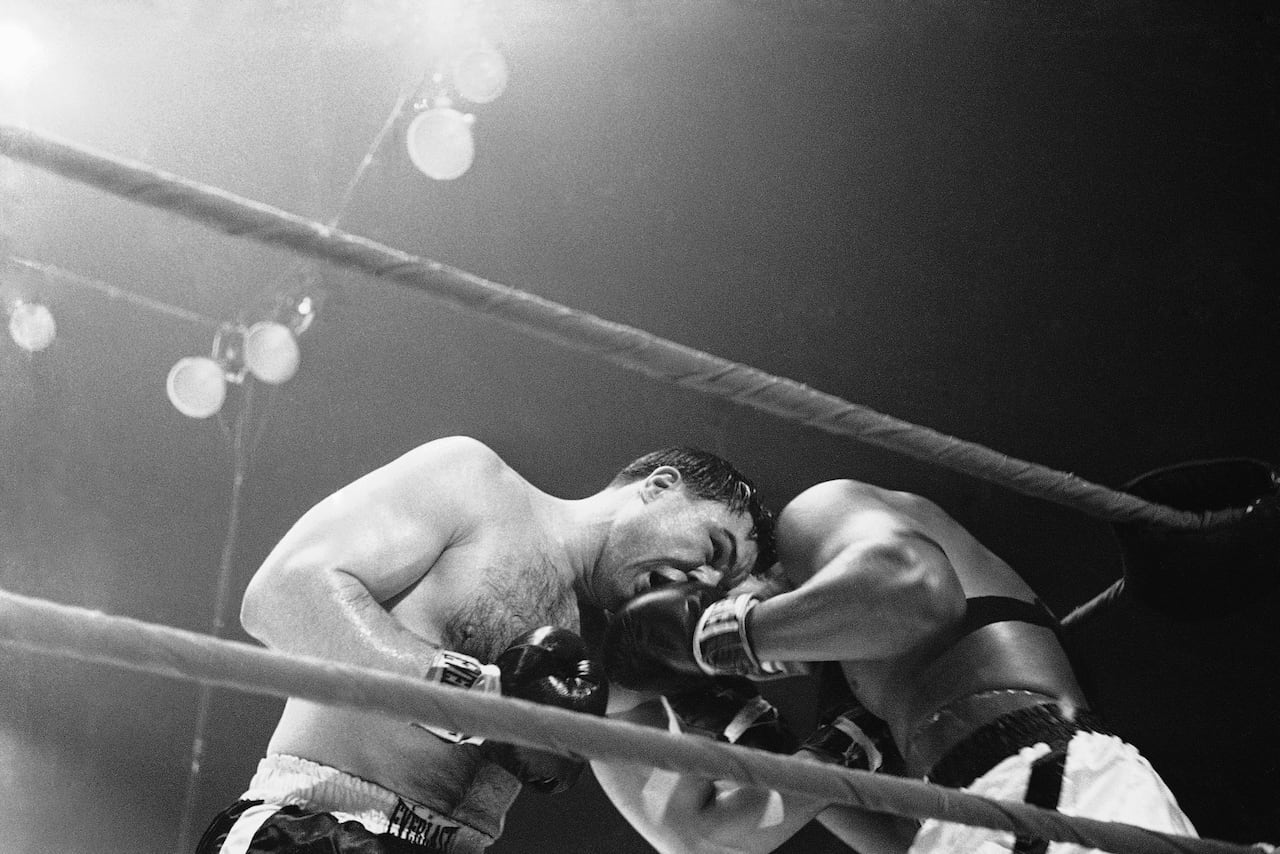
George Chuvalo, left, exchanges punches with Muhammad Ali during the fourth round of their match in Toronto on March 29, 1966. (The Associated Press)
Although Chuvalo did not become Canada’s first heavyweight champion since Tommy Burns in the early 1900s, he garnered admiration for his tenacious performance. Ali famously dubbed him the toughest opponent he had encountered up to that time, yet Chuvalo had mixed feelings about being the first to take the champion the full 15 rounds.
“In a strange way, that fight is what defines me for many of my fellow Canadians, but it took a long time for me to appreciate how good that made me feel,” he reflected.
Never knocked down
With his wife Lynne and five children at home, Chuvalo valued the financial rewards that followed his fight with Ali. He would go on to defeat contenders Jerry Quarry and Manuel Ramos, while narrowly losing to Oscar Bonavena and Jimmy Ellis in close matches.
In 1967, Chuvalo was stopped for the first time by Frazier, requiring a silicone implant to prevent an eyeball from drooping. His loss to Foreman three years later was also significant, as the referee intervened before Chuvalo’s “never knocked down” streak could potentially be broken.
Chuvalo’s second encounter with Ali in Vancouver in 1972 was less thrilling and not as closely contested as their first fight. He ultimately retired on a high note six years later, concluding his career with a record of 73 wins, 18 losses, and two draws, 64 of those victories achieved by knockout.
Unlike some of his contemporaries, the effects of repeated concussive blows were not visible on the surface. Chuvalo remained articulate and spoke quickly, often accompanied by a witty remark or self-deprecating humor.
Nevertheless, like many boxers, he struggled with the mundane aspects of life after retirement, which he once referred to as “humdrum.” He dabbled in various ventures, opening a nightclub, obtaining a real estate license, promoting fights, hosting a television show, and even experiencing an infamous defeat in a cameo role in David Cronenberg’s The Fly.
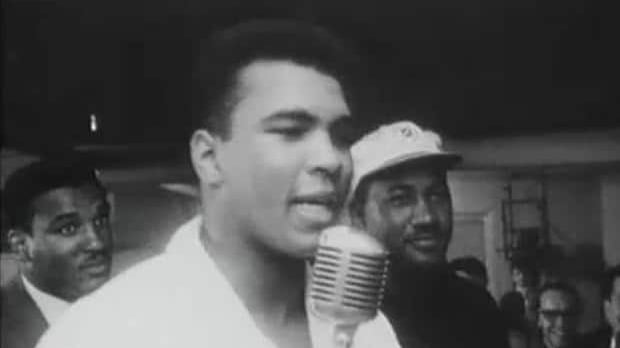
Chuvalo faces Ali for the world title in Toronto in 1966.
In a 1968 interview with CBC Radio, Chuvalo expressed his wish for his four sons not to pursue boxing professionally, yet he found himself unable to shield them from dangers outside the ring. His youngest son, Jesse, became addicted to heroin after a prescription pain medication ended, tragically taking his life at the age of 19 in 1985.
By then, his older brothers George Jr. and Steven had also fallen into addiction and were involved in petty crimes to support their habits. In an interview with CBC’s the fifth estate in 1995, Steven Chuvalo conveyed the “worthlessness” he and his brothers felt due to their addictions.
“My dad spent many years tracking us down around the city, particularly Georgie and me, dragging us out of drug houses and basically trying to keep us alive,” he recounted.
George Jr. suffered an overdose just three days after being released from Kingston, Ont., jail on Halloween night in 1993.
Only four days later, 49-year-old Lynne Chuvalo took pills and left behind a suicide note.
“I never expected she would do it, but I wasn’t surprised,” Chuvalo told the New York Times shortly thereafter, noting that his wife never recovered from the loss of their first child.
Steven Chuvalo, who had expressed a desire to make his father proud on the fifth estate, would die from an overdose eight months after that interview.
Despite these tragedies, Chuvalo persisted, marrying again and cherishing moments with his eldest son Mitch, daughter Vanessa, and grandchildren. He traveled across the country, candidly speaking to students, as noted in a 1998 CBC Radio report.
“If you ever find yourself tempted to try drugs or flirt with the idea, I hope you think of me, George Chuvalo, and consider what drugs did to my family,” he said.
In 2017, news emerged regarding family disputes involving Chuvalo’s surviving children and his second wife, Joanne, from whom he was divorcing. Some disagreements revolved around concerns about Chuvalo’s cognitive decline and future care.
By 2022, Mitch Chuvalo revealed on a podcast that his father no longer recognized him during visits.
By then, the City of Toronto had acknowledged his legacy with the official opening of the George Chuvalo Community Centre in 2019, a 7,000-square-foot facility located in the Junction.