

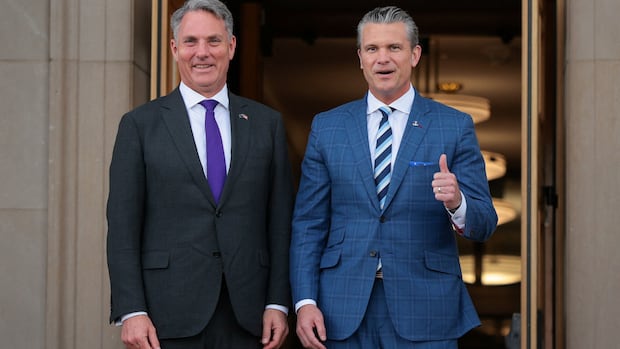

U.S. Secretary of War Pete Hegseth welcomed Australia’s Defence Minister and Deputy Prime Minister Richard Marles with a handshake, a hug, and a laugh at the Pentagon earlier this month.
Before they began their discussion, Hegseth acknowledged the media with a thumbs-up, and the two engaged in one of their routine meetings.
In his opening comments, Hegseth described the gathering as a “reflection of the deepening partnership … at a personal level between our administrations, between our countries, between our militaries.”
The discussions concluded with an announcement that the U.S. would enhance its military presence in Australia, which currently includes a remote intelligence base in the desert and yearly rotations of thousands of U.S. soldiers across Australian facilities.
According to Australian Prime Minister Anthony Albanese, the U.S. remains Australia’s closest ally and primary strategic partner, as stated in a recent statement.
For Canadians, witnessing Hegseth and Vice-President JD Vance publicly support Australia at the Pentagon and on social media while the U.S. administration focuses on this nation’s economy, military, and sovereignty could be frustrating.
However, experts suggest that the strengthening U.S.-Australia alliance carries a transactional aspect—partly influenced by geographical factors.
“Australia provides the U.S. with force projection capabilities across the Indian Ocean, facilitating rapid access to the South China Sea and the Taiwan Strait,” explained James Curran, a modern history professor at Sydney University.
In essence, these are two strategic waterways that China is openly interested in controlling.
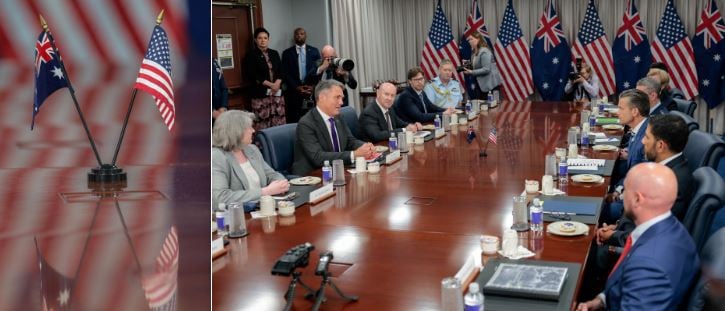
Highlights from U.S. Defence Secretary Pete Hegseth’s meeting with Australia’s Defence Minister Richard Marles in Washington, D.C., earlier this month. (Reuters)
A Solid Alliance?
The meeting’s timing was intentional, coinciding with the 75th anniversary of the ANZUS Treaty, a security pact among Australia, New Zealand, and the U.S.
This military alliance originated in 1941, with the arrival of the first American soldiers in Queensland.
“A million American service members utilized Australia as a staging ground to advance north and secure victory in the Pacific during World War II,” Marles remarked during the recent summit.
However, Curran highlights that as China continues to enhance its economic and military strength in the Pacific, officials at the Pentagon are acknowledging the potential decline of U.S. influence in Asia.
Australia serves as a crucial and substantial outpost for the U.S. in the region, significantly complementing its network of bases within the Indo-Pacific Command.
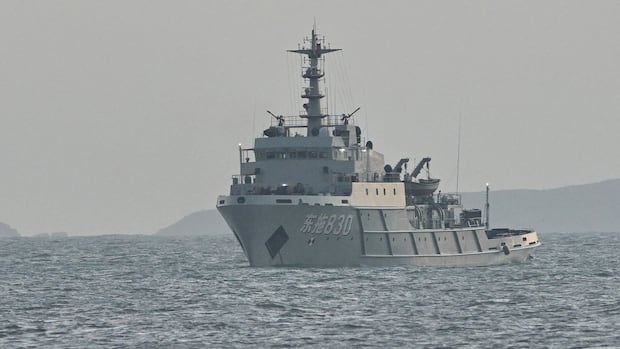
The Australian government perceives the growing Chinese naval presence in its waters and trade routes as an imminent concern.
The People’s Liberation Army, representing the military branch of the Chinese Communist Party, possesses the largest navy globally and is developing an increasingly capable long-range air force.
A 2026 report from the Lowy Institute, a non-partisan think tank, indicated that China could target northern Australia with ballistic missiles from its outposts in the South China Sea. The authors of the report noted that this capability would “grow significantly over the next decade,” and that China’s influence could also disrupt trade, sever undersea communication networks, and execute sophisticated cyber operations.
Marles informed reporters after the Pentagon meeting that it represents “the largest conventional military buildup by any nation since World War II.”
While China is a crucial trading partner for Australia, Marles expressed concerns regarding the ongoing expansion of military assets and capabilities in Australia’s vicinity without any diplomatic initiatives, during a defence summit in 2025.
“None of this offers strategic reassurance,” he stated.
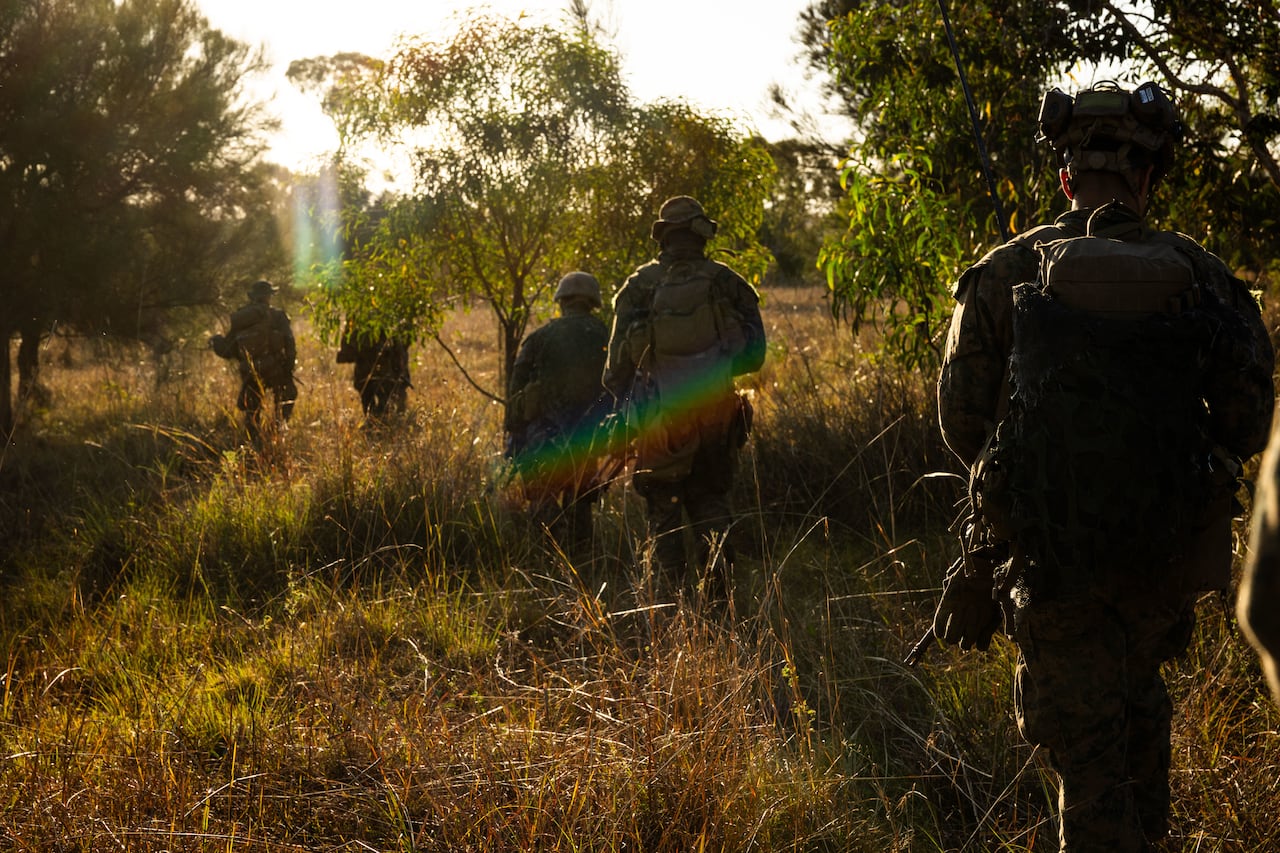
U.S. Marines patrol in Queensland, Australia, in 2025 as part of the largest bilateral military exercise between Australia and the United States. (U.S. Marine Corps Lance Cpl. Raul Sotovilla)
Over the years, Curran notes that Australia has had to grapple with its distance from traditional allies. While British military presence diminished in the late 1960s, American forces remained.
“We are now facing Chinese industrial, military, and economic power at such a scale that, before long, China will become the preeminent power in Asia,” he remarked. “Does Australia, therefore, need to confront the region independently for the first time in its history?”
Observing a Trade War from Afar
As the U.S. renews its focus on Australia, media outlets in Australia are closely monitoring the escalating trade conflict between the U.S. and Canada.
During the U.S. visit, a journalist questioned Australia’s deputy prime minister about the rationale for a closer alignment with the U.S. amid a recent survey showing a “significant number of Australians expressing major concerns about the reliability of the U.S. as an ally.”
Marles defended the U.S.-Australia alliance, citing the substantial threat posed by China.
“This is fundamentally critical to Australia’s defense,” he stated.
The Australian Defence Force felt the urgency of this threat in 2025, when three Chinese warships were detected sailing less than 300 kilometers off Sydney’s coast, as reported by ABC News.
Beginning next year, the partnership with the U.S. will introduce a rotation of U.S. nuclear-powered submarines, as part of a trilateral security arrangement that includes the U.K. (AUKUS). Australia anticipates that this will eventually lead to acquiring its own submarines from the U.S., which are available only to vetted allies.
Expressing gratitude for the U.S. alliance, Marles remarked, “we are genuinely appreciative of it.”
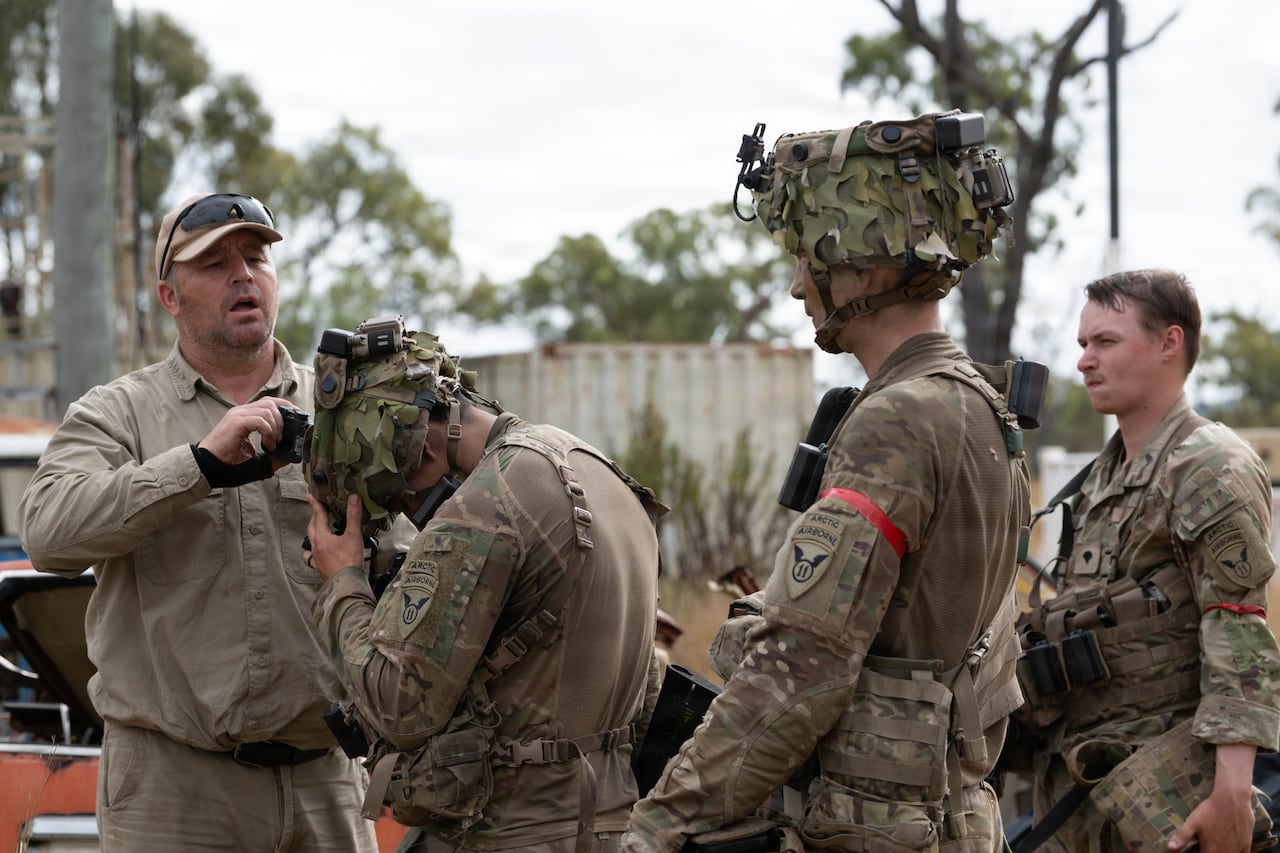
U.S. soldiers perform gear checks during allied nation field exercises and live-fire training in northeastern Australia in June 2026. (Army Pfc. Abraham Gomez)
Domestically, the Australian government has been compelled to justify its strengthening ties with the U.S.
The AUKUS alliance is under heightened scrutiny, with a public inquiry assessing the deal’s cost, sustainability, and public support, which critics claim was established behind closed doors.
A report from the Guardian newspaper in Australia in September highlighted numerous facilities on the Australian mainland that are either partially or fully under U.S. control. Figures were presented in Parliament to Australia’s Foreign Affairs Minister Penny Wong by another legislator, asserting that the U.S. has turned Australia into a forward operating base, putting its citizens at risk due to U.S. foreign policy actions.
Minister Wong dismissed these assertions, stating that the U.S. military’s presence in Australia is rotationally based, mutually agreed upon, and at Australia’s invitation.
“We believe that the U.S. alliance enhances Australian sovereignty. It grants us access to capabilities that would otherwise be unavailable to Australia,” Wong remarked.