

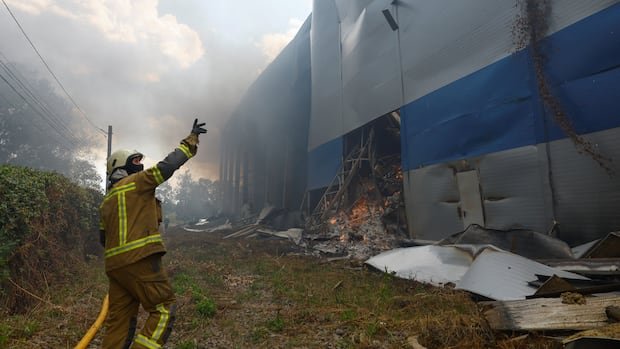

In the ongoing conflict, a Russian drone targeted Ukraine’s SBU security service headquarters in Kyiv, marking a significant strike in the escalating air assault by Russia. Ukrainian President Volodymyr Zelenskyy revealed that the drone specifically aimed at the office of the Security Service head in the building. This attack, considered a major escalation of hostilities, led Zelenskyy to pledge a retaliatory response as Russian airstrikes on Kyiv entered their tenth consecutive day. The aftermath saw thick black smoke billowing from Kyiv’s historic city center, with the city’s mayor confirming at least 12 injuries from the strike.
Throughout the extended conflict with Russia, Ukrainian government structures have seldom faced damage from drone and missile attacks. Zelenskyy announced a decisive and proportional reaction to the strike, emphasizing the need for a response mirroring the severity of the assault. The SBU acting head, Oleksandr Poklad, briefed Zelenskyy on the readiness for active countermeasures against the Russian strikes, with plans already outlined for the response.
The SBU plays a crucial role in Ukraine’s military operations, conducting impactful strikes inside Russia to disrupt Moscow’s military capabilities and energy infrastructure. Noteworthy operations by the agency include the 2022 bridge bombing to occupied Crimea and the 2025 drone operation codenamed Spiderweb, targeting Russian strategic assets. The SBU is also implicated in covert operations targeting senior Russian military figures accused of war crimes, a practice condemned by Russia as terrorism.
The attack on the SBU coincided with the expected visits of U.S. envoys Steve Witkoff and Jared Kushner to Moscow and Kyiv, amid prolonged diplomatic efforts to resolve the conflict. The protracted conflict, spanning over 1,200 kilometers of the front line, has stalled peace negotiations, with both sides engaging in relentless attacks. Kyiv has intensified strikes within Russia, aimed at disrupting Moscow’s economic capacity to sustain the war.
Recent developments have seen a shift in Russia’s tactics, with increased daytime strikes using fast-flying drones. The relentless air-raid sirens have become routine in Kyiv, causing exhaustion among residents dealing with constant disruptions. The pervasive fear has led some residents to consider leaving the city temporarily for respite, reflecting the toll the ongoing conflict has taken on civilians.
In a personal account, Ivan Datsiv, an IT professional, described the harrowing experience of a Russian drone striking his apartment, prompting thoughts of leaving the city due to the incessant attacks. The frequency of alerts and bombings has left residents like Datsiv questioning the efficacy of seeking shelter repeatedly, contemplating relocation to safer areas away from the danger in Kyiv.