


A recently discovered undersea nursery containing billions of baby sea cucumbers near Sanikiluaq, Nunavut, is providing valuable insights into the species and potentially offering economic opportunities for the Arctic community. Lucassie Arragutainaq, the Sanikiluaq Hunters and Trappers Association manager, mentioned that while the community consumes small sea cucumbers regularly, the larger adult sea cucumbers could be exported to markets in China and Japan.
The association, considering incorporating the species into commercial fishing plans, collaborated with scientists from Memorial University in Newfoundland to study the Orange-footed sea cucumber, also known as Cucumaria frondosa, in 2018. Led by Annie Mercier, a professor at the university’s ocean sciences department, the team, with the help of community residents, discovered the nursery the following year, a revelation that surprised Arragutainaq and his community.
Mercier, expressing excitement about the find, highlighted the lack of knowledge about sea cucumber nursery grounds globally due to the cryptic nature of the creatures, making them challenging to locate. In a 2023 article published in the peer-reviewed journal Polar Science, Mercier detailed the discovery of the Cucumaria frondosa nursery near Sanikiluaq, marking the first such finding.
The tiny baby sea cucumbers, less than two millimeters in length, were described as pink specks on rocks and mussel shells near the surface, distinct from the adults residing deeper in the ocean. Mercier emphasized the vast scale of the nursery along the Belcher Islands archipelago coastline, situated one to three meters below the ocean surface.
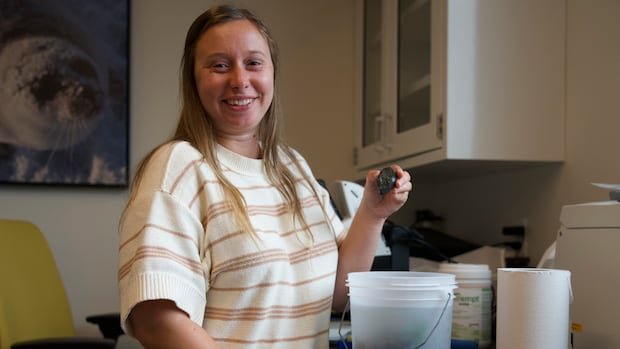
The research team underlined the importance of this discovery in exploring various aspects of sea cucumber life, such as growth rates and behaviors, crucial for species management. Joséphine Pierrat, a postdoctoral researcher, pointed out the abundance of baby sea cucumbers during a research trip, illustrating the potential for further study and understanding of these creatures.
The partnership with the community in collecting and studying sea cucumbers was highlighted as pivotal for data collection essential for proposing a commercial fishery to the Department of Fisheries and Oceans. Arragutainaq shared the community’s journey from considering a scallop fishery to contemplating the addition of sea cucumbers, acknowledging the regulatory challenges ahead.
Mercier stressed the significance of cautious management to ensure the sustainability of any future fishery, citing global precedents of depleted sea cucumber populations. Arragutainaq envisioned job creation through a fishery benefiting the community, emphasizing the need for learning and adaptation to this new opportunity. Pierrat mentioned the potential for a dual market strategy, with adult sea cucumbers catering to international markets and younger ones serving local consumption, highlighting the culinary versatility of sea cucumbers as a crunchy and flavorful food source.