

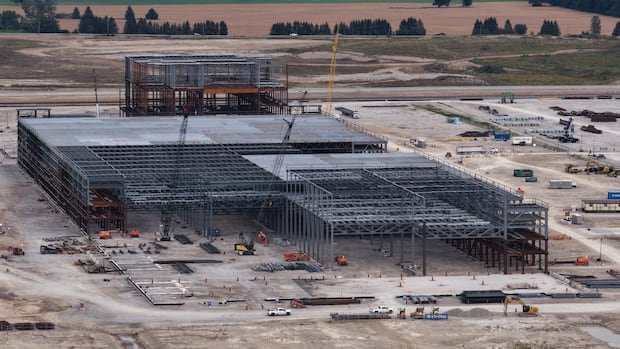

The electric vehicle industry in Canada has experienced setbacks in major EV and battery projects across Ontario, Quebec, and British Columbia. Projects have been delayed, cancelled, suspended, substantially changed, and even led to bankruptcy, as automakers and suppliers adjust to lower-than-expected demand.
Volkswagen’s PowerCo battery plant in St. Thomas, Ont., has pushed back production by two years to 2029 due to evolving market demand. Concerns have been raised about whether Canada overestimated the growth rate of the EV market. Critics suggest that the demand may not reach the anticipated levels needed to support the intended scale of battery production.
Grieg Mordue, a former Toyota executive and retired McMaster University professor, highlights two key issues with Canada’s EV investment strategy: scale and location. The inefficiency of producing batteries for one million EVs annually in St. Thomas has been questioned, especially considering Volkswagen’s major assembly operations are in the southern United States and Mexico.
While some view the setbacks as temporary challenges in the ongoing shift towards electrification, others question the feasibility of the current investment strategy. Joanna Kyriazis from Clean Energy Canada emphasizes that these long-term investments are essential for Canada to stay competitive in the global auto industry’s transition towards electric vehicles.
Despite the current slowdown in EV demand, there are signs of recovery in the Canadian market. New registrations of battery-only EVs have increased, indicating a growing interest in electric vehicles. The investments in building domestic battery capacity are also seen as crucial for Canada’s future competitiveness in the evolving auto industry landscape.